RPG · New game
Wick
A seed-generated dungeon crawl in which a shrinking circle of lantern light is the whole map, and three very different predators read that light in three very different ways.
#25 this weekAI-assisted: Code, Graphics, Sound, Text
The game runs in this tab. No install, no account.
The short answer
Wick hands you a lantern and a staircase to find. Oil drains as you walk, the visible circle shrinks from seven tiles to one, and three predators respond to light or sound in their own ways. Bumping a monster is how you attack. The game runs in an HTML5 frame in the browser and is free to play.
What is Wick?
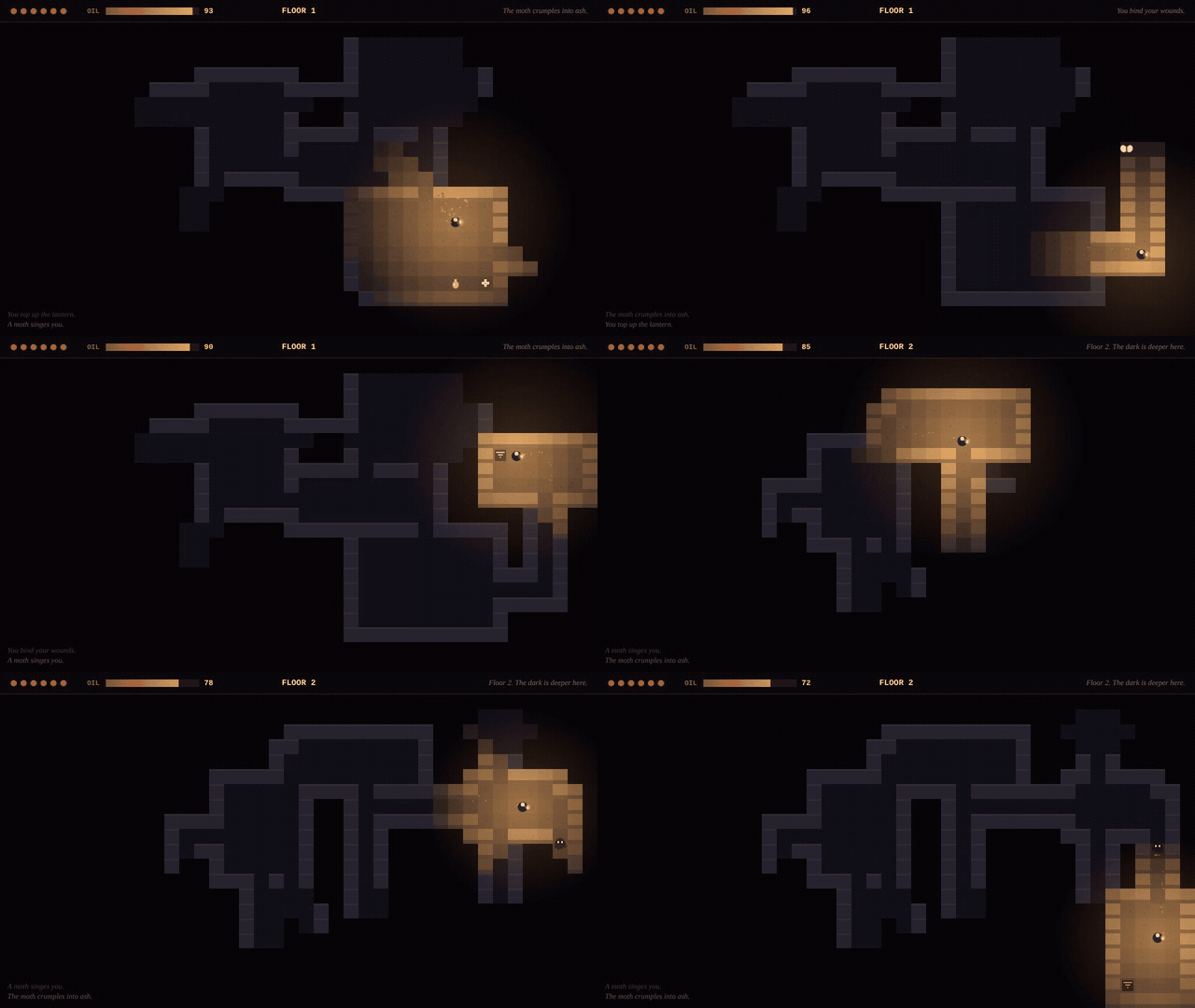
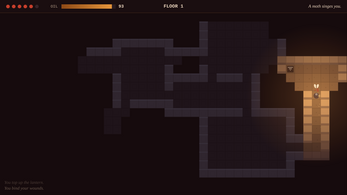
Wick is a turn-based dungeon crawl played in a browser, drawn in 2D, and built around one resource: the oil in your lantern. There is no map to consult. The circle of light around you is the map, and it tightens as the oil goes.
That single constraint shapes everything else. With a full lantern the glow reaches seven tiles; with a dry one it reaches a single tile. Every two steps burns a point of oil, so movement itself is a cost, and standing still is not free either, because waiting is silent but the flame keeps drinking.
Three creatures share the floors with you and each reads the light differently. Moths fly at a burning lantern from beyond its glow, shades refuse the bright core and wait at its edge, and hounds ignore light altogether and hunt by sound instead. FishRaposo has the game in development, with Vinícius Raposo credited as designer.
How to play
Each floor asks the same question: where are the stairs, and can you reach them before the oil runs out? You get no overview, only the shrinking circle around you, so the answer is found by walking and by noticing what the light does and does not reveal.
Flasks on the floor buy you time, topping the lantern back up when the glow has tightened to almost nothing. Combat is deliberately blunt: moving into a monster is the attack, while moving into a wall costs nothing at all, so a wrong turn against stone is free and a wrong turn against teeth is not.
Floors come with a loop or two built in, which matters when something is behind you. A circular route lets you keep moving, break contact, or swing round whatever is chasing you instead of being pinned at a dead end. Waiting costs no noise, but it still burns oil, so every pause is a small wager against the dark.
Controls
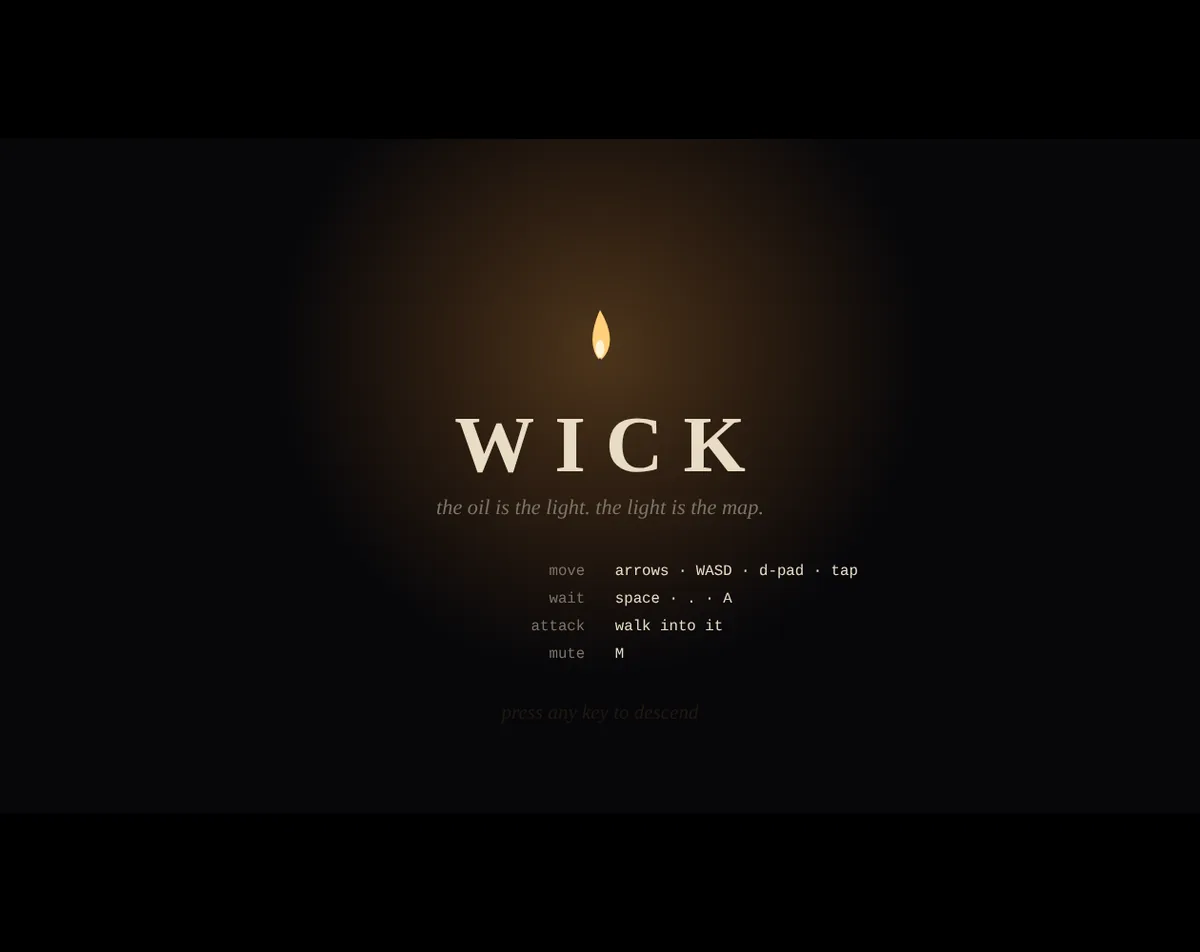
Wick accepts keyboard, gamepad, and touch or mouse input, and the three schemes resolve to the same small set of decisions. On a keyboard, the arrow keys, WASD, or HJKL all move and attack; a gamepad uses the d-pad or the left stick; on a touchscreen, or with a mouse, you tap toward the tile you want to head for.
Waiting a turn is space, the period key, or Z on a keyboard, the A button on a pad, or a tap on yourself. After a death, a new run begins with R, Enter, or space, with A or Start on a gamepad, or with a tap. The M key mutes the audio.
Because every input is one decision in a turn-based game, the mappings stay short. There is no aiming, no combo string, and no camera to manage: the whole interface is direction, wait, restart, and silence.
| Input | Action |
|---|---|
| Arrow keys, WASD, or HJKL | Move or attack in that direction |
| D-pad or left stick | Move or attack in that direction |
| Tap toward a tile (touch or mouse) | Move or attack toward where you tapped |
| Space, period, or Z | Wait a turn |
| Gamepad A button | Wait a turn |
| Tap yourself | Wait a turn |
| R, Enter, or Space | Start a new run after death |
| Gamepad A or Start | Start a new run after death |
| Tap | Start a new run after death |
| M | Mute the audio |
Tips for your first run
The three creatures punish different habits, so the first few floors are mostly about learning which mistake you are about to make. Oil is the clock, and the light radius is the warning that the clock is running down. A few habits worth forming early:
None of this needs speed. Every step is a considered turn, and the game gives you as long as you like to decide where that step goes.
- Meet moths at a corridor mouth rather than in the open, since they fly at the lantern from beyond its glow.
- When hounds are near, stop moving. Sound travels along corridors rather than through rock, so stillness loses them.
- Keep the flame high around shades, which cannot stand the bright core and wait at the edge for the oil to fail.
- Use the loop in each layout to circle round a pursuer instead of retreating into a dead end.
- Collect flasks while the light is still wide, before seven tiles become one.
- Bump walls freely to feel out a room, because stone costs you nothing.
- Wait deliberately rather than constantly: silence is useful, but the lantern burns through it.
Content and replayability
Every floor is generated from a seed, and layouts include a loop or two so that a chase can become a lap around the level rather than a sprint into a corner. Scoring rewards depth first: each floor you descend is worth 100 points, and each kill adds more on top. Your deepest floor and your best score are both remembered, which gives a failed run something to show for itself.
Wick is listed for 28 October 2026 and is still in development, so the shape of the dungeon could shift before it settles. What already exists is unusually open: source, design notes, and a task pack are published, and that pack holds two realistic gameplay bugs and one multi-system feature request, each with a brief, acceptance criteria, a reference solution, and an automated check.
For a player rather than a tinkerer, the pull is narrower and cleaner: fresh layouts from seeds, a score ceiling to push against, and runs compact enough that dying is an inconvenience rather than an evening.
Presentation and performance
The game is plain JavaScript running on a 2D canvas. There is no engine and there are no asset files, and every sound is synthesized in the browser, which keeps the download to the code itself and means the whole thing sits inside an HTML5 frame you can open and play.
Under the hood, field of view is computed with recursive shadowcasting, so the lantern's circle is worked out properly against corners and walls rather than approximated. The creatures navigate on Dijkstra maps, and shades retreat along a flee map, which sends them toward open ground instead of into dead ends.
Layout quality got specific attention: floor connectivity was tested across 1,800 generated floors, a check aimed at the worst outcome in a game like this, where a staircase is generated somewhere unreachable and the run dies of geometry rather than monsters. The result is a small, quiet-looking game with a fair amount of engineering behind the darkness.
Who should play it
Wick suits players who like their tension slow. If you enjoy turn-based decisions where the cost of a step is visible and the information you have is deliberately incomplete, the lantern economy gives you that in a single readable number, and the moths, shades, and hounds give it three different flavours of pressure.
It also fits short sessions. Floors are small, the goal on each one is a staircase, and the scoring is a number you can chase across attempts rather than a story you have to sit through. Anyone who has bounced off sprawling roguelikes for lack of time will find the scale here friendlier.
Finally, it is worth a look if you enjoy seeing how small games are built. The source, the design notes, and the task pack with its bugs and feature request make it a readable example as well as a playable one. If you want atmosphere and a resource clock rather than Reflex tests, this is aimed at you.
Screenshots
How we tested it
The build was loaded from games.debutplay.com in a headless Chromium session on ; the canvas started and no request was blocked. The guide was last checked on .
From the developer
Your lantern burns oil. The oil is your light, and the light is all of the map you get. Find the stairs on each floor before the dark finds you. Every two steps burn a point of oil, and the circle of light shrinks as it drains: seven tiles when the lantern is full, one when it's dry. Flasks on the floor buy you time. Three things live down here, and each one reads the light differently Moths see a burning lantern from beyond its glow and fly at it. Fight them at a corridor mouth.Shades can't stand the bright core of the light. They wait at its edge, eyes in the dark, for the oil to run out.Hounds don't care about light. They hunt by sound, and sound travels along the corridors, not through rock. Stand still and they lose you. Every floor is generated from a seed, with a loop or two so you can circle round what's hunting you. Walking into a wall costs nothing. Walking into a monster is how you fight. Each floor you descend is worth 100…
Frequently asked questions
Is Wick free to play?
Yes. Wick runs in an HTML5 frame in the browser at no cost, and the listed price is free. No paid content is described, so the seeded floors, the three creature types, and the scoring are what you get when you press play.
Can it be played on a phone or tablet?
Touch input is supported: tap toward the tile you want to move or attack into, tap yourself to wait a turn, and tap to begin a new run after a death. The listed platform is HTML5 in a browser frame, and no separate app is named.
How does the lantern oil work?
Two steps burn one point of oil. With a full lantern the light reaches seven tiles; once it is dry the circle closes to one. Flasks found on the floor buy more time, and waiting a turn is silent but still burns oil.
How does combat work?
By walking into things. Moving into a monster is the attack, while moving into a wall costs nothing, so you can feel out a room's edges without spending anything on stone. Placement matters too: moths are best met at a corridor mouth.
How do hounds track you?
By sound rather than sight. Noise travels along corridors instead of through rock, so standing still makes them lose the trail while walking keeps it alive. That makes waiting a real tactic against hounds, even though the lantern keeps burning while you do it.
How is progress scored?
Each floor you descend is worth 100 points and each kill adds more on top. The game remembers your deepest floor and your best score, so a run that ends badly still leaves a number to beat next time.
What games are similar to Wick?
The closest matches on DebutPlay are Finite Reality - Incremental, Cyberworld Endless, Spirevale (Demo). They share the same genre, so the controls and the pace carry over.
Something wrong or missing? Tell us. How we test games.