Action · New game
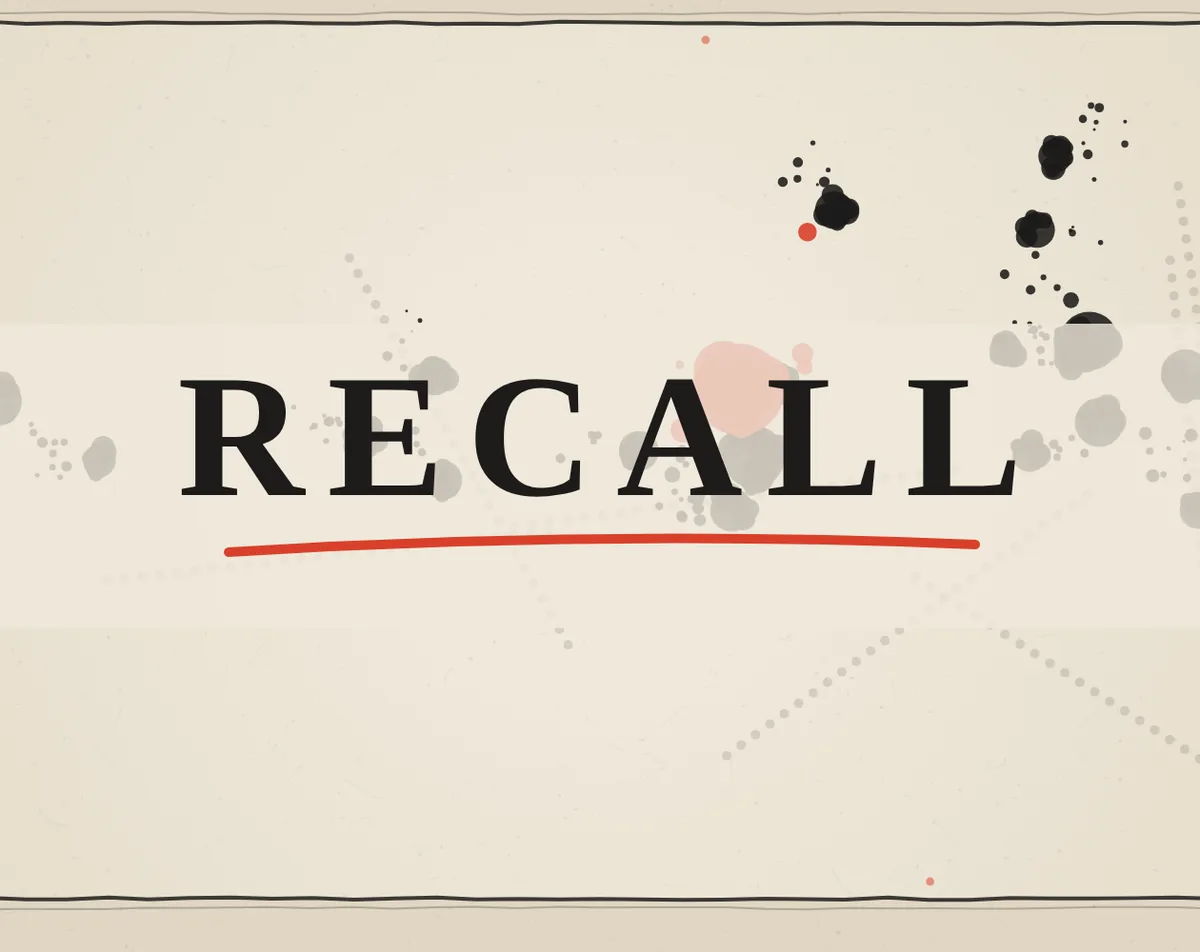
Recall
Recall hands a single blade to a top-down arcade run where every clean catch feeds a multiplier and every kill stains the floor of a painting you can keep.
#36 this weekAI-assisted: Code, Graphics, Sound, Text
The game runs in this tab. No install, no account.
The short answer
Recall is a free, browser-based top-down arcade game built around one throwing blade. Throw it through a pack, call it back early for a second cut, and catch it cleanly to push a multiplier as high as ×8. Five enemy types apply wave-based pressure, and the ink left on the floor becomes a PNG at the end of a run.
What is Recall?
Recall is a two-dimensional top-down arcade game built around a single throwing blade. A throw sends the blade out through a pack of enemies, and calling it back early gives it a second cutting pass on the return trip, so one throw threatens twice. Developer FishRaposo lists it as in development, free to play, and running in the browser through HTML5, with a publish date of 28 October 2026.
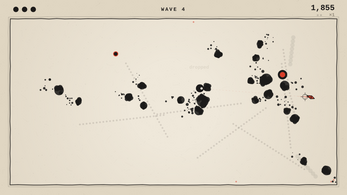
Five enemy types carry the pressure across waves, each with one idea behind it. Mites swarm. Darters lock an aim, draw a line and lunge down it. Splitters break in two. Spitters hold their distance and fire ink that the blade can cut out of the air. Brutes take three hits and drag the blade's speed down. Every third wave returns a heart; every fifth is heavy on Brutes.
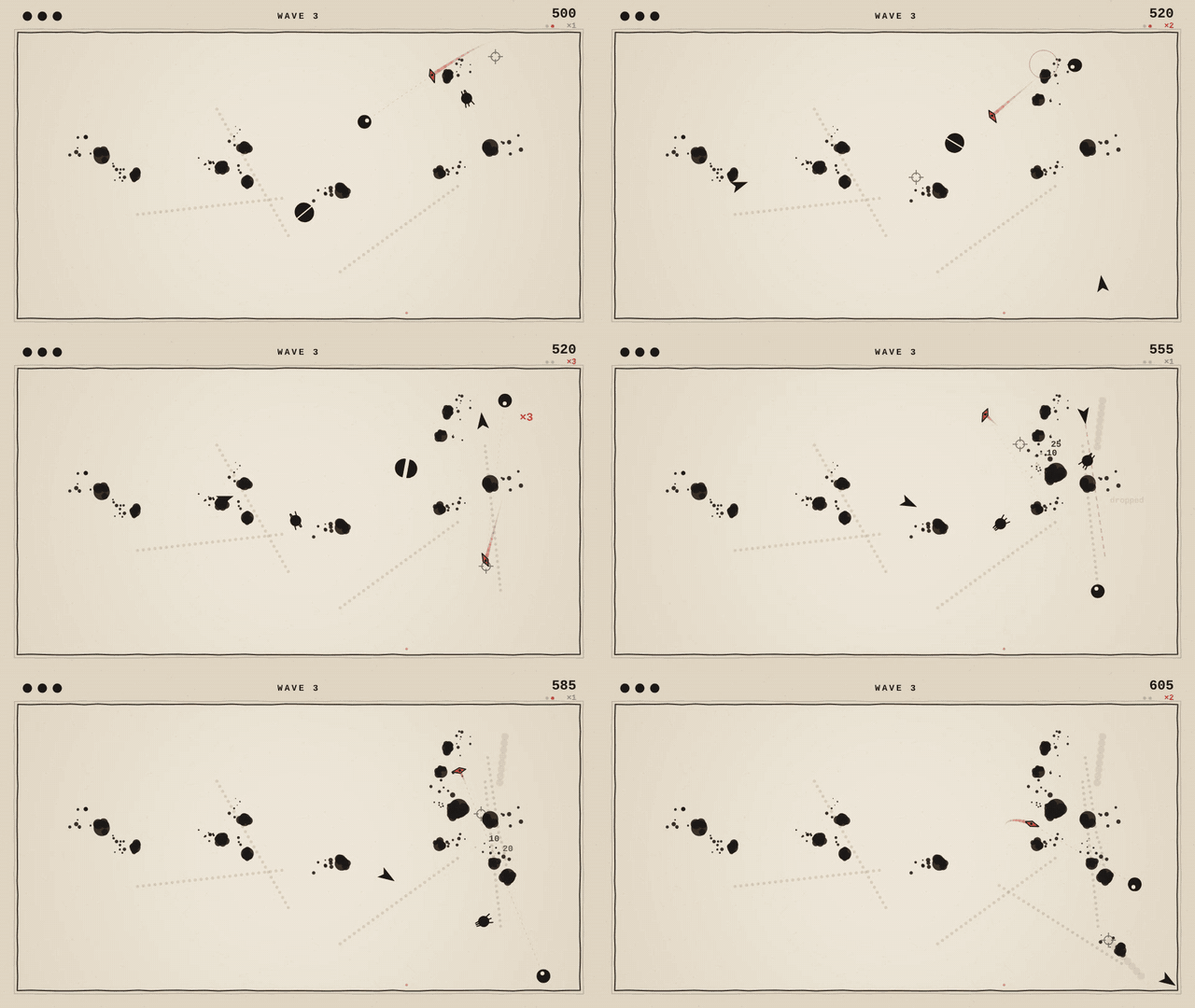
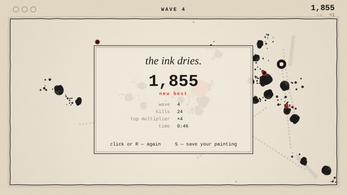
The hook is what a run leaves behind. Everything killed leaves ink on the floor, and when the run ends that floor is treated as a painting rather than a mess, saveable as a PNG — so each attempt produces a picture of where the blade went and what it hit.
How to play
Every run revolves around one blade and the two halves of its flight. The outward throw cuts through whatever is in the pack; the recall cuts again on the way home, which makes the return path as important as the throw. The multiplier is tied to the catch: take the blade back after it has hit something and the multiplier climbs, up to ×8, but take it back empty when there was something available to hit and the multiplier is gone.
Enemy handling follows from those rules. Mites swarm, so standing still is the mistake. Darters draw a line before they lunge down it, so the answer is to leave the line before the lunge. Splitters divide in two, which makes one throw rarely enough. Spitters fire ink from a distance and the blade cuts it out of the air. Brutes need three hits and slow the blade while it passes through them.
Waves carry their own rhythm. Every third wave hands a heart back, and every fifth wave leans hard on Brutes, so a run alternates between recovery and a heavier test of the throw-and-return cycle. Ink accumulates on the floor the whole time, and the game-over screen is where that ink becomes a file.
Controls
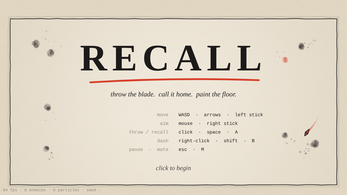
Three schemes cover the whole game. With mouse and keyboard, WASD moves, the mouse aims, left click throws and recalls, right click or shift dashes, and escape, M and F handle pause, mute and fullscreen. Keyboard-only play moves with the arrow keys, lets aim follow movement, and puts throw and recall on Z or space with X as the dash.
On a gamepad, the left stick moves and the right stick aims. A, RB or RT throws and recalls; B, LB or LT dashes; start covers pause, mute and fullscreen. On the game-over screen, S saves the painting. Audio only begins after the first click or key press, because browsers hold sound back until the player interacts with the page.
The blade leaves and returns on the same input, which keeps the core decision on timing: hold the blade out longer, or pull it home for the second cut. Dash is the escape valve when a Darter's line is already drawn and standing still is no longer an option.
| Input | Action |
|---|---|
| WASD / arrow keys / left stick | Move |
| Mouse / right stick | Aim |
| Keyboard-only scheme | Aim follows movement |
| Left click / Z or space / A, RB or RT | Throw and recall the blade |
| Right click or shift / X / B, LB or LT | Dash |
| Esc, M and F / start | Pause, mute and fullscreen |
| S | Save the painting as a PNG on the game-over screen |
Tips for your first run
Treat the recall as an attack rather than a retrieval. Plenty of early multipliers disappear because the blade is called home on instinct right after a miss, while a target was still standing in front of it. Watch the return lane before pressing anything.
- Pull the blade home through enemies rather than empty floor; the return cut costs nothing extra.
- Recall after a connection to build the multiplier, but avoid an empty catch while something was available to hit.
- Keep moving against Mites, since the swarm punishes a stationary throw.
- Read the Darter's drawn line and step off it before the lunge, not during it.
- Budget extra throws for Splitters, because one throw is rarely enough.
- Aim at incoming Spitter ink; the blade cuts it out of the air.
- Count waves: the third brings a heart back, the fifth brings the Brutes and their speed-dragging three-hit bodies.
Content and replayability
The content is five enemies and the combinations the waves make of them. Mites, Darters, Splitters, Spitters and Brutes each carry a single behaviour, and the variety comes from which ones share the floor: a swarm that stops you moving, a line that stops you standing, a split that costs a second throw, ink that must be cut or dodged, and a Brute that slows every pass through it.
Replay value sits in the multiplier and the painting. Chasing ×8 means taking risks on the catch, and the painting means a run leaves a visual record that can be saved as a PNG from the game-over screen, so a strong attempt is worth keeping beyond a number. Hearts on every third wave stretch a run and give the multiplier chase more room to recover.
Recall is a short, minimalist, high-score-driven game by design, which sets expectations: sessions built around a single run rather than a campaign. It is still in development, so the final shape of the game may change.
Presentation and performance
The look is deliberately plain: two-dimensional, top-down and minimalist, with the ink on the floor doing most of the visual talking. By the end of a run the arena doubles as a record of the run, and the game-over screen turns that record into a PNG.
Underneath, it is plain JavaScript on a 2D canvas with no engine and no asset files, and every sound is synthesized in the browser. Game feel comes from hitstop, screen shake and buffered input, and the blade's homing was tested at 30, 60 and 144 frames per second — the sort of detail that matters for a timing game about catching a returning object.
Design credit goes to Vinícius Raposo, with AI assistance used in the build against his brief and the result tested the way production software is tested. Recall plays best in Chrome or Edge on a desktop browser, and stays silent until the first click or key press.
Who should play it
Recall suits players who like a score attack with a short loop and a clean, legible rule set. If the appeal of a boomerang weapon — throw, reposition, catch — sounds like a whole game rather than a single mechanic, this is that game. The ×8 ceiling rewards anyone who plans the return trip and punishes anyone who mashes the recall.
It also suits players who want something to look at afterwards. A run ends in a painting rather than a stat screen alone, and that painting can be saved as a PNG. Keyboard-only play is covered, and so is gamepad play, which is unusual for a browser arcade game built around aiming.
Anyone after a long campaign, character progression or a story should look elsewhere. Recall trades all of that for one blade, five enemies, a multiplier and a floor that fills with ink.
Screenshots
How we tested it
The build was loaded from games.debutplay.com in a headless Chromium session on ; the canvas started and no request was blocked. The guide was last checked on .
From the developer
You have one throwing blade. Throw it through the pack. Call it back early and it cuts again on the way home. Catch it after a hit and your multiplier climbs, up to ×8. Catch it empty while there was something to hit, and the multiplier is gone. Everything you kill leaves ink on the floor. When the run ends, the floor is a painting, and you can save it as a PNG. Five enemies, one idea each Mites swarm. Don't stand still.Darters lock their aim and draw a line, then lunge down it. Get off the line.Splitters break in two. One throw is rarely enough.Spitters keep their distance and fire ink. Your blade cuts it out of the air.Brutes take three hits and drag your blade's speed down. Every third wave gives back a heart. Every fifth is heavy on brutes. Controls Mouse + keyboardKeyboard onlyGamepadMoveWASDarrowsleft stickAimmousefollows movementright stickThrow / recallleft clickZ or spaceA, RB or RTDashright click or shiftXB, LB or LTPause ·…
Frequently asked questions
Is Recall free to play?
Yes. It carries no price and runs in the browser through HTML5.
What are the controls?
WASD or the arrow keys move with aim on the mouse, and left click or Z or space throws and recalls. Dash sits on right click, shift or X, and escape, M and F cover pause, mute and fullscreen.
Can Recall be played with a gamepad?
Yes. The left stick moves, the right stick aims, A, RB or RT throws and recalls, B, LB or LT dashes, and start handles pause, mute and fullscreen.
How high does the multiplier go?
Up to ×8. Catching the blade after it has hit something raises it, while catching it empty when there was something to hit wipes it out.
Can the end-of-run painting be saved?
Yes. Everything killed leaves ink on the floor, and on the game-over screen S saves that floor as a PNG.
Why is there no sound at the start?
Browsers block audio until the player interacts with the page, so sound begins after the first click or key press.
What games are similar to Recall?
The closest matches on DebutPlay are Digit Rush, Wild Dashers (Demo), Balitti. They share the same genre, so the controls and the pace carry over.
Something wrong or missing? Tell us. How we test games.