Adventure · New game
The Getting-Up Hour
A free browser folk-horror narrative adventure about escorting Lychgate’s dead along their old routes while deciding what the Register will record.
#19 this weekAI-assisted: Code
The game runs in this tab. No install, no account.
The short answer
The Getting-Up Hour is a complete browser narrative adventure set in Lychgate, where the dead rise each night at the hour they died and must be walked home. As Wren Halloway, you learn routes, escort walkers, and record the truth or a kinder version in the Register. Six nights lead toward Nan’s unknown route, and choices shape four endings.
What is The Getting-Up Hour?
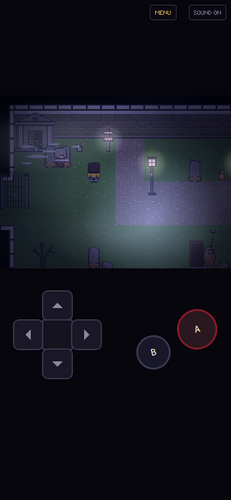
The Getting-Up Hour is a free browser-based narrative adventure from Jgesq, set in the town of Lychgate, where the dead keep strict hours. At the exact minute of their deaths, the town’s dead rise and walk the routes they followed at that hour in life, from a constable’s beat to a shopkeeper’s walk to his store.
The town’s danger is not hunger; it is panic. A risen walker who finds the way blocked, doubted, or disbelieved can panic, and the rules of Lychgate exist to prevent that. You play as Wren Halloway, sixteen, apprentice to Dr. Sayles, the town’s Walker. The job means learning routes, walking the dead home, and recording everything in the Register.
Wren’s grandmother Nan, a retired midwife, is dying. Her night will bring the one route nobody knows. The story runs across six nights and is a complete narrative adventure of roughly two and a half to three hours. It is folk horror about grief, duty, and the roads loved people keep walking, with no battles and four endings shaped by hidden measures of truth and mercy.
How to play
The game is structured as six nights, each with a named route. Night One is the Constable’s Beat, followed by the Runner, Mr. Pruitt Opens the Store, Ada Walks Home, the Cenotaph, and finally Nan’s Hour. Wren’s work is not combat. The dead are not enemies, and the tools described are attention, escort, and the truth.
Players learn the routes, accompany the walkers, and keep watch for the kind of obstruction or doubt that can push a walker into panic. Each night closes at the Register. There, the player chooses between a truthful account and a kinder version. The book remembers the choice, and two hidden measures, truth and mercy, influence which of four endings Lychgate receives.
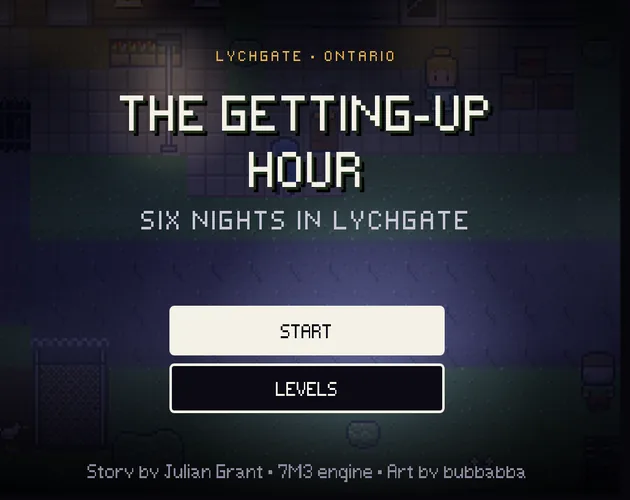
Progress saves at the start of each night, so the story can be taken in sessions. Completed nights can be replayed from LEVELS on the title screen, which makes it possible to revisit earlier decisions without starting the whole story again.
Controls
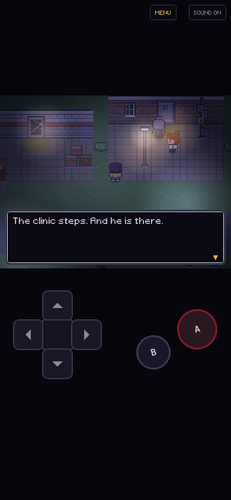
Controls are built around a small set of inputs. Movement uses the arrow keys or WASD on a keyboard, or the on-screen D-pad on a touch device. Interaction and advancing use the A button, Z, or Enter. That is enough to cover the stated actions: moving through Lychgate, interacting with the town and its walkers, and advancing the narrative.
The game is played in a browser on phone or desktop, with keyboard and touch both supported, so the same HTML5 build can be used with whichever input is at hand. The core loop uses the listed keyboard or touch inputs rather than mouse commands, and no battle commands are needed because the game has no battles. Progress saves at the start of each night, which fits short sessions between the six named nights. Finished nights can be replayed from LEVELS on the title screen, and the same movement and interaction inputs apply when a night is revisited.
| Input | Action |
|---|---|
| Arrow keys or WASD | Move |
| On-screen D-pad | Move on touch devices |
| A button, Z, or Enter | Interact and advance |
Tips for your first run
First-run advice starts with attention. Lychgate’s dead follow the routes they walked in life, so a player who notices the constable’s beat, the runner’s road, the shopkeeper’s walk, and the other named nights will have a clearer sense of what each escort involves.
Do not treat the walkers as enemies. The dead are not the enemy, and the game has no battles; the panic to avoid can happen when a walker’s way is blocked, doubted, or disbelieved. Use the stated tools, attention, escort, and truth, rather than trying to force a solution.
At the Register, remember that both options matter. Writing the true account and writing the kinder version relate to hidden measures of truth and mercy, so a choice is not just flavor text. The book remembers, and those measures shape one of four endings. Because progress saves at the start of each night, it is practical to stop between nights and return later. Finished nights can be replayed from LEVELS, so a first run does not have to carry every outcome.
- Watch the route and the hour tied to each named night.
- Keep the way clear and avoid doubt when escorting a walker.
- Choose Register entries with both truth and mercy in mind.
- Treat the six nights as a complete two-and-a-half-to-three-hour story.
- Use LEVELS to replay finished nights rather than restarting everything.
Content and replayability
The content note is clear: death, dying, and grief run through the story, handled gently. There is no gore and no jump scares. The horror is quiet, rooted in a town where the dead walk familiar roads and panic is the real danger. That makes the game more somber than shocking, and the folk-horror label fits the setting of Lychgate and its routines.
The main story is a complete narrative adventure of about two and a half to three hours. Replay value comes from the Register and its consequences. Each night ends with a choice between the truthful account and the kinder version, and the book remembers what is written.
Two hidden measures, truth and mercy, determine which of four endings the town receives. Finished nights can be replayed from LEVELS on the title screen, while progress saves at the start of each night. The game is singleplayer and built around choices that matter, so a second visit can explore a different balance of honesty and compassion without treating the walkers as combat targets.
Presentation and performance
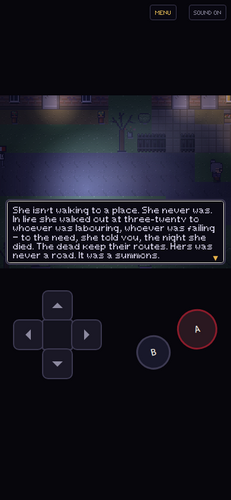
Presentation leans on pixel art and atmosphere rather than shock. The pixel art is credited to bubbabba, and the game is built on the 7M3 engine. Lychgate’s folk-horror mood comes through the routines of the dead, the named routes, and the Register that records each night, not through gore or jump scares.
The story is presented as an interactive fiction adventure with a story-rich, atmospheric tone. It runs as an HTML5 game played in a browser on phone or desktop, with keyboard and touch both working. There are no battles to slow the pace, and the action set is small: movement, interaction, and narrative choice.
Progress saves at the start of each night, and finished nights can be replayed from LEVELS on the title screen. That structure suits a browser game that can be resumed between its six named nights, and the quiet horror remains the focus rather than spectacle.
Who should play it
The Getting-Up Hour is for players who want a complete narrative adventure in a browser, not a combat game. Its strongest fit is someone drawn to interactive fiction, folk horror, pixel art, atmospheric stories, and choices that carry into multiple endings.
The premise should appeal to readers who like a defined job inside a strange town: Wren is an apprentice Walker who learns routes, escorts the dead, and keeps the Register. The six-night structure gives the story a clear shape, and the two-and-a-half-to-three-hour length makes it a single-evening or multi-session play depending on pace.
Players should be comfortable with death, dying, and grief as constant themes, though the game handles them gently and avoids gore and jump scares. Anyone looking for battles, action combat, or a bright, low-stakes setting should look elsewhere. Anyone intrigued by a town where panic is the danger and mercy competes with truth at the end of every night has the clearest reason to click Play.
Screenshots
How we tested it
The build was loaded from games.debutplay.com in a headless Chromium session on ; the canvas started and no request was blocked. The guide was last checked on .
From the developer
The dead of Lychgate keep good hours. Every night, at the exact minute they died, the town's dead get up and walk the route they walked at that hour in life — the constable's beat, the runner's dawn road, the shopkeeper's walk to his store. Nobody in Lychgate has ever been eaten. The danger was never hunger. The danger is panic: a risen walker who finds the way blocked, doubted, or disbelieved can panic, and a panic is the one thing the town's rules exist to prevent. You are Wren Halloway, 16, apprentice to Dr. Sayles, the town's Walker — the one who learns the routes, walks the dead home, and writes it all down in the Register. Your grandmother Nan, the retired midwife, is dying. When her night comes, her route will be the one route nobody knows. Six nights. One town. One book of the dying. Night 1 — The Constable's Beat Night 2 — The Runner Night 3 — Mr. Pruitt Opens the Store Night 4 — Ada Walks Home Night 5 — The Cenotaph Night 6…
Frequently asked questions
Is The Getting-Up Hour free?
Yes. It is a free HTML5 browser game, played in the browser on phone or desktop.
What platforms and devices can run it?
It is an HTML5 game played in a browser. The stated devices are phone or desktop, and keyboard and touch controls both work.
How long is the story?
It is a complete narrative adventure of roughly two and a half to three hours, told across six named nights.
Is there combat?
No. The game has no battles, and the dead are not the enemy. The tools are attention, escort, and the truth.
How many endings are there?
There are four endings. Two hidden measures, truth and mercy, shape which one Lychgate receives, and the Register remembers each night’s choice.
What is the content note?
Death, dying, and grief appear throughout, handled gently. There is no gore and no jump scares; the horror is quiet.
What games are similar to The Getting-Up Hour?
The closest matches on DebutPlay are BARRIO BRAVO, Cat Signal 1989, ORACLE_ISLE. They share the same genre, so the controls and the pace carry over.
Something wrong or missing? Tell us. How we test games.