RPG · New game
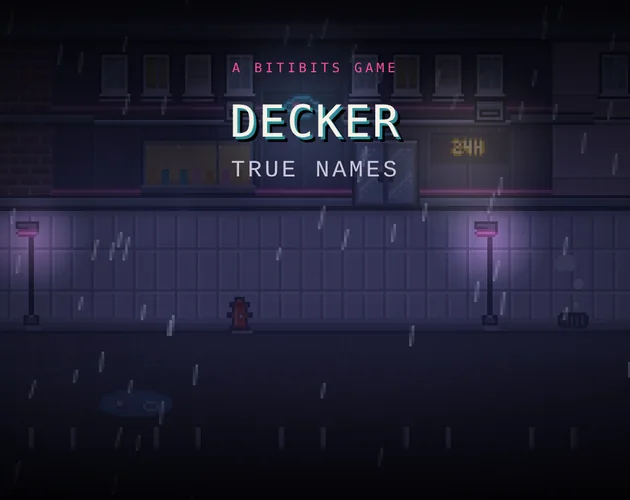
Decker: True Names
A browser-based cyberpunk RPG about lifting names, trusting Choob, and deciding what to do with a federal list that includes Rook's own.
#17 this weekAI-assisted: Code
The game runs in this tab. No install, no account.
The short answer
Decker: True Names is a free HTML5 cyberpunk RPG set in New York in 2049. Rook steals identities for the Fixer until a message offers a government database and six figures. Play for the five-chapter story, first-person battles, hidden Bond and Conscience meters, and four endings shaped by what Rook does with the list.
What is Decker: True Names?
Decker: True Names is a top-down cyberpunk RPG from Jgesq, set in New York in 2049. Rook works as a decker, lifting identities from corporate systems for the Fixer, who resells them. An anonymous message changes the job: a single file, a government database, and a six-figure offer with half paid upfront. The message knows Rook's name, which should be impossible. Choob, Rook's girlfriend and the half-chrome character closest to a conscience, reads the file first.
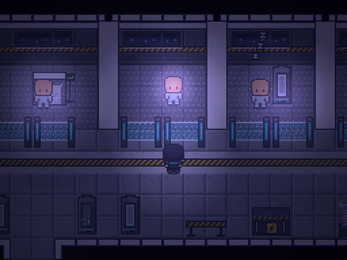
The target is a federal Registry facility in Lower Manhattan, and no sign marks its entrance. Publicly it studies anomalous cognition; inside, the server floor holds thirty-one thousand names, while a containment wing holds people. The first name on the list belongs to Rook. Magic is real in this story, and code and spellwork are treated as the same thing. The result is a role-playing game about stolen identities, true names, and what Rook decides to do with the person beside him.
How to play
Play moves through five chapters and an epilogue, roughly an hour in total. Each chapter opens with a decision that sets the route: investigate or take the money; enter the Registry through the front, the back, or its fire alarms; see a betrayal coming or freeze. These choices also shape how Rook treats Choob, so the route is not only about tactics. The story turns on who Rook trusts, who gets freed, and what happens to the list.
Combat is first-person and old-school in structure. Rook can Hack to flood an enemy's chrome with static, and a drone can be talked out of the fight altogether. Choob hits through armour. After Rook reads his own name, he can speak a creature's true name; it hurts the target, costs Rook something, and does nothing to machines. Choob later learns to ward him. The GOODS menu holds supplies such as noodle cups and almond water, while a delivery drone that disputes Rook's identity is one of the enemies. A rolling HP meter means damage ticks down after a hit, so a fast finish can save a companion who has already taken a fatal blow. Two hidden meters, Bond and Conscience, move without visible numbers; a cue signals a change, and Choob's dialogue carries the rest. Four endings wait.
Controls
Movement uses the arrow keys or WASD. Talk and confirm are mapped to Z, Enter, or Space. Back and menu use X or Esc. Touch play adds an on-screen D-pad with A and B buttons, and the game is built with phones as a primary target. The input scheme is the main thing to learn before the first chapter, because the game runs as a single HTML5 file in a browser.
Save anywhere is supported by an autosave plus three save slots. Chapters unlock in LEVELS as they are reached. No gamepad support or key rebinding is stated, so the keyboard and touch options are the reliable set. A player entering the Registry should know the confirm and back keys before a route choice, because those decisions arrive at the start of a chapter.
| Input | Action |
|---|---|
| Arrow keys or WASD | Move Rook |
| Z, Enter, or Space | Talk and confirm |
| X or Esc | Go back and open the menu |
| On-screen D-pad with A and B buttons | Touch play |
Tips for your first run
Treat each chapter-opening decision as a route lock, not as flavour. The choice to investigate or take the money, to storm the Registry or use its alarms, and to anticipate betrayal or freeze can change what follows. Keep a dedicated save slot before those moments; the autosave plus three slots make it practical to test another path.
- Watch Choob's lines and the small cue that appears when Bond or Conscience shifts, because the meters never show numbers.
- Try Hack on chrome-heavy enemies and attempt to talk the delivery drone out of combat instead of spending HP.
- In a close fight, use the rolling HP meter: damage continues to tick down, so a quick finish can rescue a companion after a fatal hit.
- Save before a chapter choice, then use another slot to explore the Registry through a different entry point.
Content and replayability
Decker: True Names carries a content note for violence and gunfire, people held and experimented on against their will, police pursuit, and betrayal. There is no gore. Those elements sit inside a story about identity theft and a federal list, not inside a horror set piece, though the Registry's containment wing gives the material a serious edge.
The choice structure supports replay. Four endings are framed as redemption, succumbing to darkness, being trapped by the past, and a quieter conclusion in another city. What Rook does with the list decides which doors stay open. Bond tracks how much Rook listens to Choob; Conscience tracks how Rook treats the people behind the data. Because neither meter shows a number, a second run can test a different social line as well as a different route. Decker is a series of standalone games, and True Names is the first, so this story is complete on its own.
Presentation and performance
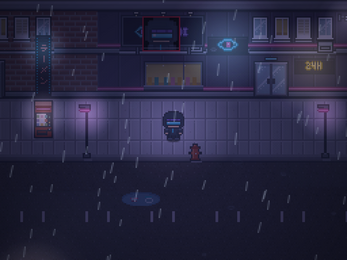
Cyberspace here is not a neon grid. It is damp yellow carpet, fluorescent lighting, repeating office floors, and an EXIT sign that keeps moving between doors. First-person battles play out against warping, psychedelic backdrops. Rain falls on Canal Street, traffic brakes and honks when Rook stands in the road, a stealth alarm can trigger in the Registry, and a billboard on every corner carries Rook's face during the countdown to the rooftops.
The whole game is one HTML file of about 4 MB, or 2.3 MB zipped. Every map, face, line of dialogue, sound effect, and the original score sits inside that file. The music is not recorded audio; it is written as notes and performed live by the browser. No separate download, launcher, or installation is required, and the game is intended to load on a bad connection and run on a laptop, tablet, or phone. That small footprint is part of the BITIBITS approach: compact games that respect time and data.
Who should play it
Players who like Neuromancer and Shadowrun will recognise the deckers, fixers, corporate ICE, and the city that sells identity back to its residents. Fans of old-school JRPGs get first-person battles, a rolling HP meter, a GOODS menu, and a cyberspace built from Backrooms imagery rather than neon. Readers who want choices to persist across a short campaign will find five chapters, an epilogue, two hidden meters, and four endings.
The game also suits anyone who wants a complete story in about an hour without a large install. The touch controls and the single-file HTML5 build make it easy to start on a laptop, tablet, or phone. The content note points to violence, gunfire, experimentation, police pursuit, and betrayal, so players should weigh that before entering the Registry.
Screenshots
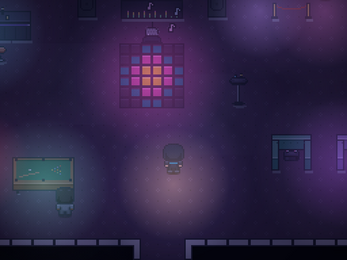
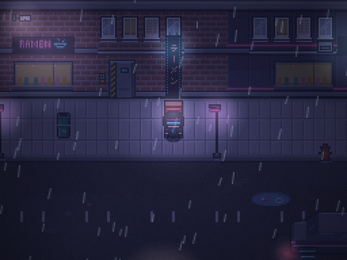
How we tested it
The build was loaded from games.debutplay.com in a headless Chromium session on ; the canvas started and no request was blocked. The guide was last checked on .
From the developer
DECKER: TRUE NAMES A BITIBITS game by Julian Grant New York, 2049. The city runs on who you are. Every door, every train, every paycheque checks your name. And names can be stolen. You steal them. Your name is Rook, you're a decker, and you lift identities out of corporate systems for a man called the Fixer, who sells them on. Then an anonymous message arrives. One file. One government database. Six figures, half up front. It knows your name. Nobody knows your name. Choob reads it first. She's your girlfriend, she's half chrome, and she's the only conscience you've got. You can listen to her. You don't have to. The database belongs to the Registry, a federal building in Lower Manhattan with no name on the door. Officially, it studies "anomalous cognition". Its server floor holds thirty-one thousand names. Its containment wing holds people. The first name on the list is yours. Magic is real. It always was. The code and the spell were…
Frequently asked questions
What is Decker: True Names?
It is a top-down cyberpunk RPG set in New York in 2049. Rook steals identities for the Fixer until a message offers a government database, six figures, and a job tied to Rook's own name.
Is the game free?
Yes. It is free, and it runs as an HTML5 game in a browser.
How long does it take?
The campaign has five chapters and an epilogue, with a length of about an hour.
Does it work on phones?
Touch controls add an on-screen D-pad with A and B buttons. The game is built with phones as a primary target and runs on a laptop, tablet, or phone.
How many endings are there?
Four: redemption, succumbing to darkness, being trapped in the past, and a quieter ending in another city.
Can progress be saved anywhere?
Yes. An autosave and three save slots support saving anywhere, and chapters unlock in LEVELS as they are reached.
What games are similar to Decker: True Names?
The closest matches on DebutPlay are Wick, Strikeline: Quest, Finite Reality - Incremental. They share the same genre, so the controls and the pace carry over.
Something wrong or missing? Tell us. How we test games.