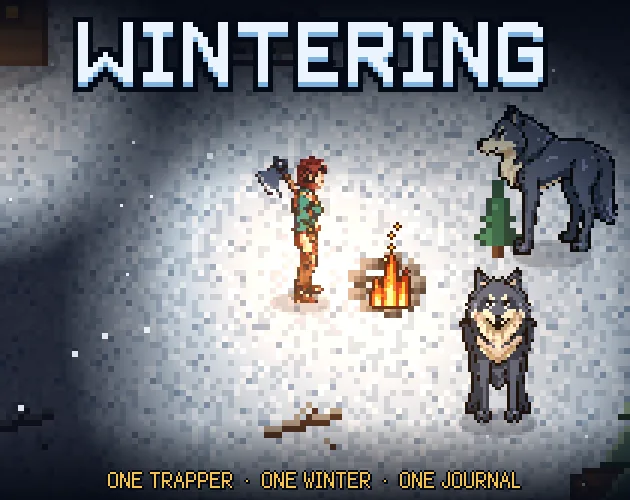
Survival · New game
WINTERING
A lone trapper, a ten-day winter and a budget of warmth, food and light: here is how the browser demo and the full release fit together.
#4 this weekAI-assisted: Code, Graphics, Text
The game runs in this tab. No install, no account.
The short answer
WINTERING is a top-down taiga survival game about a lone trapper stretching warmth, food and light across a ten-day winter. A free browser demo covers the first three days; the $6.99 Windows release adds the full season, two blizzards, a bear, a buildable beacon and two endings. Play it now to learn the wolf and boar tells before night falls.
What is WINTERING?
WINTERING is a short, top-down survival action game from CSAF — Core Systems Asset Factory. The setup is a lone trapper with a single winter to endure on a taiga. The full Windows release costs $6.99 and covers ten days; a browser demo offers the first three days at no cost. It was published on 27 October 2026.
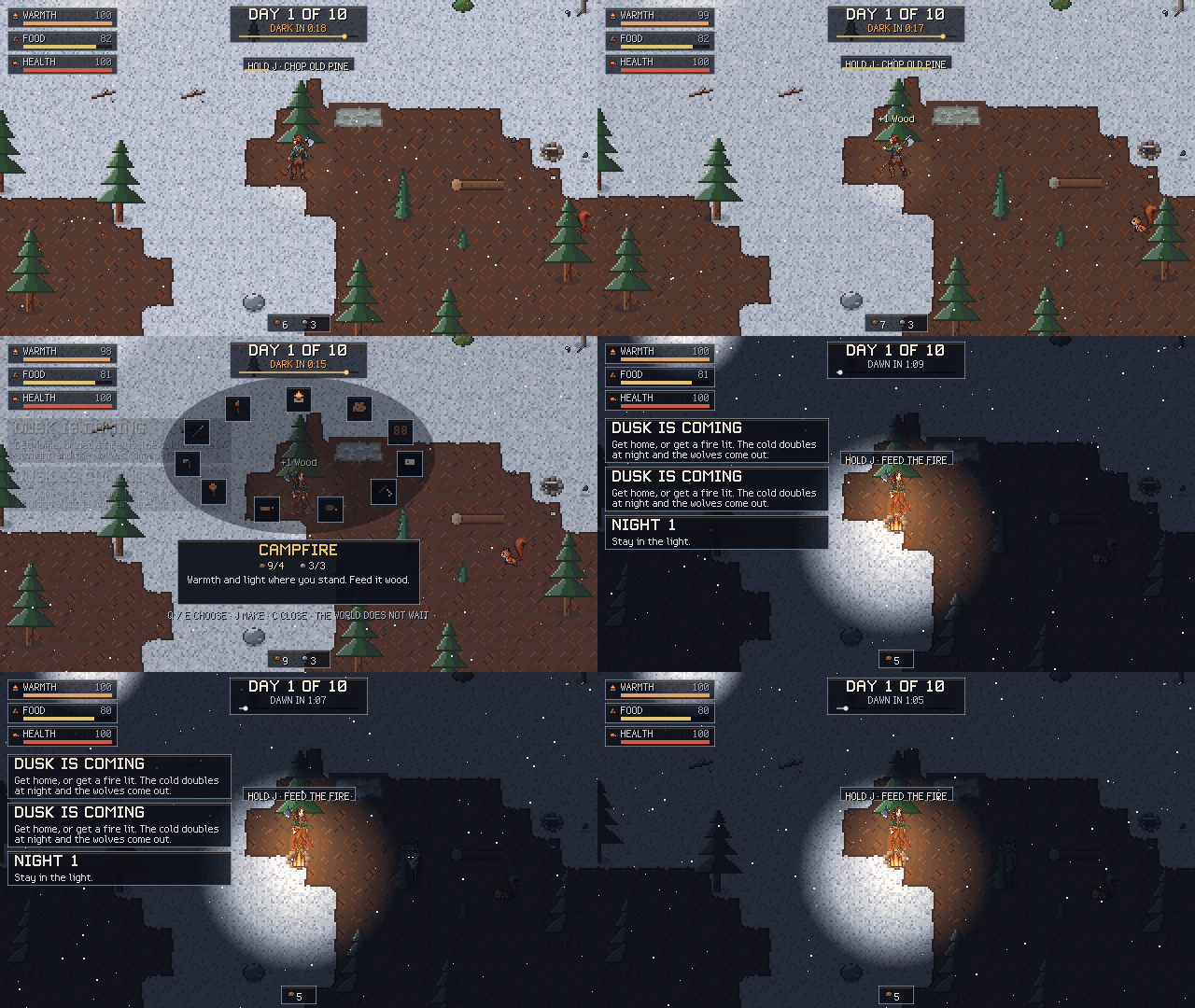
The core pressure comes from three resources: warmth, food and light. All three fall in real time while the player moves, crafts and fights, so no action is neutral. Daylight lasts two and a half minutes; night follows, drains warmth nearly twice as fast and brings wolves out. Wood sits close to the hut, food does not, and every trip away from the fire is a wager against darkness.
Progress is not only a longer survival streak. The hut's chest keeps its contents between winters, and a field journal carries forward what the trapper has learned: beast behaviour, poisonous plants, discovered places and caches. The full game ends in one of two ways, the thaw or the beacon, and a winter lived through takes roughly half an hour.
How to play
The loop is a budget rather than a power fantasy. A day gives two and a half minutes of light, then a night that drains warmth almost twice as quickly and lets wolves roam. The player chooses how far to range from the hut: wood is nearby, food is not, and the return trip has to be paid for in time or light.
Harvesting uses a hold input. Chopping, digging and gathering all depend on holding that input, and the recipe ring used for tools and fires does not pause the world. Ten recipes appear in the demo: stone axe, flint spear, torch, campfire, fur cloak, snowshoes, bandage, fishing line, roast meat and grilled fish. The paid version adds a beacon brand.
Combat rewards reading a tell. A wolf circles, then drops low and still before lunging across the player's path toward where the player is heading; a sidestep and a strike during recovery answer it. A boar paws the ground and charges in a straight line, so a tree behind the player turns the charge into a stun. After a first fight with a species, the journal holds the tell and the game traces the attack line.
Controls
Three input families are supported: keyboard, gamepad and touch. Harvesting uses a hold input that chops, digs and gathers. That hold covers the resource work, while the recipe ring handles construction and the combat advice is positional: step aside from a lunging wolf, put a trunk behind the player against a boar.
The control design keeps attention on the world clock. Because the recipe ring runs in real time, opening it is a decision with a cost, not a safe pause. A held harvest action also commits the trapper to a spot for a moment. Touch input carries the same loop to a touchscreen.
Positioning and timing carry the stated skill load: sidestep a lunge, position a trunk between the trapper and a charging boar, and choose when to spend daylight on a crafting ring that keeps running. The scheme is small in vocabulary and wide in consequences.
| Input | Action |
|---|---|
| Keyboard | Play using the keyboard control scheme |
| Gamepad | Play using a gamepad |
| Touch | Play using touch input |
| Hold input | Chop, dig and gather while the button is held |
| Recipe ring | Craft tools and fires without pausing the world |
Tips for your first run
Two obvious strategies fail. Test bots that stayed near the fire and chopped the nearest tree starved; bots that ranged far and fought everything froze. Neither plan reached the thaw across twelve attempts each. The workable route sits between those poles: range far enough to eat, then return, carry a torch, or raise a fire on the spot.
Treat the three resources as linked clocks. Light decides how far the trip can go, warmth decides whether night is survivable, and food decides whether the next day starts. A cache found under a hollow log is marked on screen in every later winter, so exploration pays forward even after a death.
The journal is a long-term asset. Each species fought adds a tell and an attack line; each poisonous plant identified stops a wasted experiment. Storing spare supplies in the hut chest protects them across winters.
- Chop close to the hut early; wood is near, food is not.
- Leave a margin for the return trip or carry a torch.
- Build a fire where the work is instead of walking back cold.
- Fight one new species at a time to bank its tell in the journal.
- Probe hollow logs far from the hut for the five caches.
- Keep the recipe ring short; the world keeps moving while it is open.
- Store surplus in the chest before a risky trip.
Content and replayability
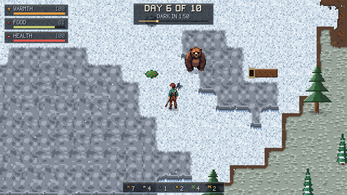
The paid Windows version contains the whole ten-day winter, two blizzards, a brown bear on the ridge, a beacon that can be built and lit, and the thaw. The browser demo stops after day three and includes ten recipes; the full game adds the beacon brand. Two endings close the full release: the thaw and the beacon.
The map is one hand-built taiga with distinct pockets: spruce and pine forest, a frozen river with fishing holes, a berry-heavy fen, a granite ridge with a beacon cairn, an abandoned camp and the trapper's hut. Wildlife includes wolves, boar, badgers, deer, foxes and small animals, with the brown bear reserved for the paid version.
Replay comes from persistence and knowledge rather than procedural maps. When the cold wins, the next winter begins at the hut, but the journal keeps beast behaviour, poison-plant notes, discovered places and the five hidden caches. A found cache stays marked in later winters, and chest contents remain. A winter that is lived through takes about half an hour, which suits repeated short attempts.
Presentation and performance
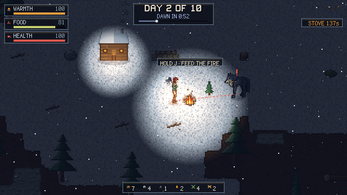
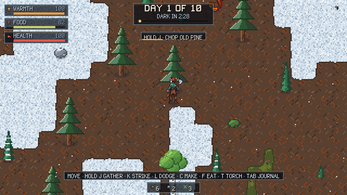
The presentation is pixel art and top-down, with snow and a taiga setting. The build is written directly in HTML5 without a game engine, and a playable browser demo runs the first three days.
Assets come from the developer's own packs: Verdant 41 Taiga and Verdant 28 Deep Forest for tiles, Wildmark and Kithfell for sprites, Sparkfall 02 for effects, Lantern and Tallow for type, the Frostfall album for music, and the Longhaul, Footfall, Steel and Bone, Haymaker, Squall and Skald sound packs.
The code and text were written with AI; the art comes from AI-generated asset packs; the sound and music are the studio's own procedural and composed work, with no generative audio model. The Windows download is a 64-bit zip that is unpacked and run, and the build is not code-signed, so Windows may show a warning on first launch. The browser demo runs in a playable HTML5 frame.
Who should play it
This suits a player who likes a tight resource budget and a short, repeatable run. The winter lasts about half an hour, the map is fixed, and the pressure comes from deciding when to leave the fire, what to carry and which animal to engage. The two-and-a-half-minute day and the faster night drain make every sortie a small wager.
It also suits players who enjoy learning enemy patterns. The wolf's low, still wind-up and the boar's straight charge are readable, and the journal turns each first fight into permanent information. The persistent chest and marked caches reward repeated winters rather than one long campaign.
It is a single-player game. The free browser demo gives three days to test the loop; the $6.99 Windows download supplies the rest of the ten-day season, two blizzards, the bear, the beacon and both endings. A player wanting a long, large-scale survival campaign should look elsewhere; this one is built around compact winters and accumulated knowledge.
Screenshots
How we tested it
The build was loaded from games.debutplay.com in a headless Chromium session on ; the canvas started and no request was blocked. The guide was last checked on .
From the developer
WINTERING is a short top-down survival action game for Windows, with a free demo you can play in your browser on this page: the first three days of the winter. You are a lone trapper with one winter to survive on a taiga. Warmth, food and light drain in real time; you hold a button to chop, dig and gather, make tools and fires from a recipe ring that never pauses the world, and fight wolves and boar that show you what they are about to do. The paid download is the whole ten-day winter, with two blizzards, a bear on the ridge, a beacon you can build and light, and the thaw. Hand-written HTML5, no engine, made by Core Systems Asset Factory using AI tools. A winter is a budget Every trip away from the fire is a bet. A day is two and a half minutes of light and then a night that drains your warmth nearly twice as fast and brings the wolves out. Wood is close to the hut; food is not. Go far enough to eat and you have to get back before…
Frequently asked questions
Is there a free demo of WINTERING?
Yes. The browser demo covers the first three days of winter at no cost, with ten recipes and the taiga map. The paid Windows download contains the full ten-day season.
How much does the full game cost?
The Windows release is $6.99. The browser demo is free.
Which platforms and inputs are supported?
The game is listed for HTML5 and Windows, with keyboard, gamepad and touch input. The Windows build is a 64-bit zip.
How long does a winter take?
A winter that is survived takes about half an hour. A single day is two and a half minutes of light followed by night.
What carries over when the trapper dies?
The next winter begins at the hut. The field journal keeps beast tells, poison-plant knowledge, discovered places and cache locations; the hut chest keeps its contents; found caches stay marked.
How many endings are there?
The full game has two: the thaw and the beacon. The browser demo covers only the first three days.
What games are similar to WINTERING?
The closest matches on DebutPlay are TDR — Tower Defense or Roguelite, DREADWAKE, Magnetic Chaos: Keep the Sphere. They share the same genre, so the controls and the pace carry over.
Something wrong or missing? Tell us. How we test games.