RPG · New game
Aethermar Online
A third-person 3D death game that runs in the browser, where logout is disabled, every other player is an AI agent, and the only exit is the boss of Floor 10.
#5 this weekAI-assisted: Code, Graphics, Sound, Text
The game runs in this tab. No install, no account.
The short answer
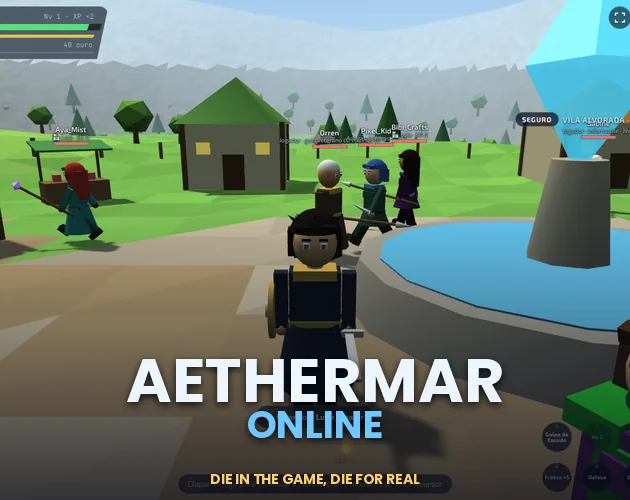
Aethermar Online is a 3D third-person action RPG built around a death-game premise: logout is off, death is permanent, and roughly thirty AI-driven players share the world with a single human. Combat borrows lock-on, dodge, block and weapon arts from soulslike games. Ten floors, ten starting weapons with their own skill trees, and a free browser demo of Floor 1.
What is Aethermar Online?
Aethermar Online is a 3D third-person action RPG built on a death-game premise and delivered as an HTML5 build that runs inside a browser. Once the world loads, logout is disabled, and the only way out is to defeat the boss that waits on Floor 10. Death is permanent for the player character, for the other players and for the NPCs alike.
What separates it from a solo dungeon crawler is the population. Roughly thirty other players, plus the NPCs, are each driven by an AI agent with its own personality, goals, fears and memory. They decide whether to grind, hide in town, join a party, steal from a corpse or turn on a companion, and none of it is scripted. Every run produces a different story, and a dead agent does not come back.
Leonardo Guidolin released the game on 30 October 2026 at $4.99, covering Windows, macOS and Linux downloads alongside the browser build. Floor 1 is playable free in the browser; the paid release spans all ten floors.
How to play
The fastest start is the browser demo, which drops a player into Floor 1 with nothing to install. The full release arrives as a ZIP: buy it, extract the archive, then open index.html in Chrome, Edge or Firefox. WebGL is required to draw the 3D world.
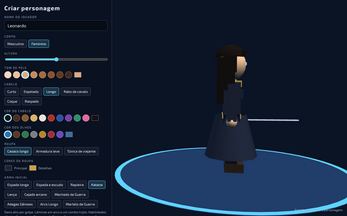
Play opens in a character creator covering body, height, skin, hair, eyes, outfit and colors, then moves to a choice of ten starting weapons. The roster runs from a longsword, a sword and shield, a rapier, a katana and a spear through an arcane staff, a war axe, twin daggers, a longbow and a war hammer. Each weapon carries a separate skill tree, so the opening pick shapes the run that follows.
From there the loop is floor by floor: cut through field monsters, fall back to safe towns to regroup, then take down the boss that closes each floor. Ten floors separate the start from the exit. Progress saves automatically, which keeps attention on the character rather than on the save file.
Controls
Input is keyboard and mouse or touch, with the camera sitting behind the character in third person. Combat uses a soulslike set: lock onto a target to keep it framed, dodge out of an incoming swing, block when a dodge is not available, and spend weapon arts and cooldown-gated skills for the heavier damage windows.
Because the fight resolves in real time and death is permanent, defense carries as much weight as offense. Locking on keeps a floor boss centered while the character circles it, a dodge costs little, and a blocked hit still gives up ground. Weapon arts and skills run on cooldowns, so a sequence that empties everything at once leaves nothing for the next group of field monsters.
Touch controls are listed next to keyboard and mouse, and the browser build is the version that needs no download at all. Neither scheme changes the combat rules: the same lock-on, dodge, block, weapon arts and skills sit underneath both.
| Input | Action |
|---|---|
| Keyboard and mouse | Supported input scheme for movement and combat |
| Touch | Touch input is listed as an alternative to keyboard and mouse |
Tips for your first run
Start on Floor 1 in the browser. It costs nothing, and it is the honest place to learn whether lock-on and dodge timing click before paying for the ten-floor release.
Treat the AI population as both a resource and a hazard. These agents carry goals and fears into every decision, which makes them useful allies and unreliable ones in equal measure.
- Choose the starting weapon for its skill tree rather than its look: ten options each carry their own tree, and the pick happens once at creation.
- Try to bring a party to a floor boss. Some AI players will accept, some will hide in town instead, and some will weigh a lone traveler as an opportunity.
- Race for the bodies. Everything a fallen player carried drops where they fell, and the first character to reach it takes the lot.
- Stock potions, crafting materials and teleport crystals before pushing a floor, not after the fight has already turned.
- Set the players' AI option on the title screen first: a local Ollama or LM Studio instance is free, an OpenAI or Anthropic cloud key is billed by that provider, and the no-AI mode uses built-in lines, works offline and costs nothing.
Content and replayability
The structure is ten floors, each mixing field monsters, a safe town to fall back to and a boss that has to be beaten. That is the spine that carries everything else.
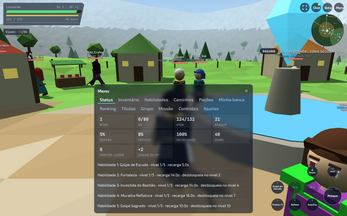
Around it sits a simulated server: global chat, party formation, trades, rankings, titles, player-run shops and PvP. Inventory work covers gear with rarity tiers, potions, crafting materials and teleport crystals, so there is a management layer between fights as well as during them.
Replayability comes from two directions. The AI population holds memory and makes its own calls — grinding, hiding, allying, looting a corpse — which no script dictates, so the social situation in front of a boss is never the same twice. The build space adds the rest: ten starting weapons with individual skill trees and a character creator spanning body, height, skin, hair, eyes, outfit and colors. With permadeath in force, a run ends and the next one begins from a different premise.
Presentation and performance
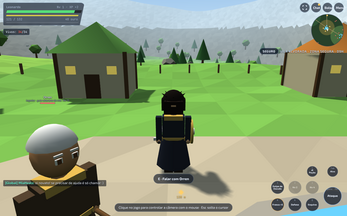
Aethermar Online renders in 3D with a low-poly art style and a third-person camera, and it runs inside a browser tab through HTML5 instead of as a native client. The paid download is a ZIP containing index.html; opening that file in Chrome, Edge or Firefox launches the game. Windows, macOS and Linux are the listed desktop platforms.
WebGL is a stated requirement, which puts the 3D rendering work on the browser's graphics stack rather than on a bundled engine install. The demo runs in an embedded HTML5 frame, so Floor 1 starts without a download or an extraction step.
The low-poly direction keeps the frame budget modest for a browser build, and the third-person view keeps the character and the target in the same shot during lock-on exchanges.
Who should play it
The audience is narrow and specific. Players who enjoy soulslike combat — lock-on, dodge, block, weapon arts, cooldown-based skills — and who find permadeath interesting rather than punishing will get the most from ten floors of it.
So will solo players who want a populated world without other humans. The roughly thirty other players are AI agents with personality and memory, and the social layer of chat, parties, trades, rankings and PvP runs entirely against them. Tinkerers get an extra hook, since the AI can be pointed at a local Ollama or LM Studio model, at a cloud OpenAI or Anthropic key, or switched off for built-in lines that work offline.
Two practical points deserve a flag. The game's language is Brazilian Portuguese (PT-BR), and the design is built for one human rather than a co-op group. The $4.99 release is a PC download, so the free browser demo of Floor 1 is the low-risk way in.
Screenshots

How we tested it
The build was loaded from games.debutplay.com in a headless Chromium session on ; the canvas started and no request was blocked. The guide was last checked on .
From the developer
Die in the game. Die for real. Aethermar Online is a 3D third-person death-game VRMMO that runs in your browser. You dive into a brand-new virtual world… and logout is disabled. The only way out is to defeat the boss of Floor 10. Death is permanent — for you, for the other players and for the NPCs. ▶ Free demo: play Floor 1 right here in your browser. The full game (10 floors, PC download) is US$4.99. The idea Think of it as a Sword Art Online–style death game simulator, where every character is driven by its own AI agent. You are the only human logged in. The other ~30 "players" and the NPCs each run on an AI agent with a personality, goals, fears and memory: they decide whether to grind, hide in town, form a party with you, steal a dead player's loot or betray you. Nothing is scripted. Every run tells a different story, and when someone dies, they are gone for good. The twist: every other player is an AI agent with its own…
Frequently asked questions
Is Aethermar Online free?
Floor 1 is playable free in the browser. The full release, which covers all ten floors, costs $4.99 as a PC download.
Do you need an AI subscription to play?
No. The no-AI option uses built-in lines and decisions, works offline and costs nothing. A local Ollama or LM Studio model is also free, while cloud keys for OpenAI or Anthropic are billed by those providers.
What happens when a character dies?
Death is permanent. The character is gone, and everything they carried drops on the spot for whoever reaches it first, AI players included.
How much content is there?
Ten floors ending with the Floor 10 boss that serves as the only exit, and ten starting weapons, each with its own skill tree.
Can you play with other humans?
No human co-op is part of the design. The player is the only human logged in, and the roughly thirty other players are AI agents.
Which platforms and browsers does it use?
The browser build is HTML5. The paid release downloads for Windows, macOS and Linux and opens as index.html in Chrome, Edge or Firefox with WebGL enabled, and touch controls are supported alongside keyboard and mouse.
What games are similar to Aethermar Online?
The closest matches on DebutPlay are The Wayward Prism, Pan Demonium: A Good Place to Die, Helheim. They share the same genre, so the controls and the pace carry over.
Something wrong or missing? Tell us. How we test games.