Simulation · New game
Do Not Tap the Glass
A $2.00 horror idle game set in a haunted Maine aquarium, where tapping the glass pays well and seven rules shape a story across seven nights.
#26 this weekAI-assisted: Code, Graphics, Sound, Text
The game runs in this tab. No install, no account.
The short answer
Do Not Tap the Glass is a $2.00 horror idle game about running a haunted aquarium for seven nights in October 1977. Grow tanks, keep pumps running, decide which of seven rules to keep or break, and chase six endings. A free browser demo covers Nights 1–3, while the full game is a single offline HTML file for Windows, Mac, Linux, and Android.
What is Do Not Tap the Glass?
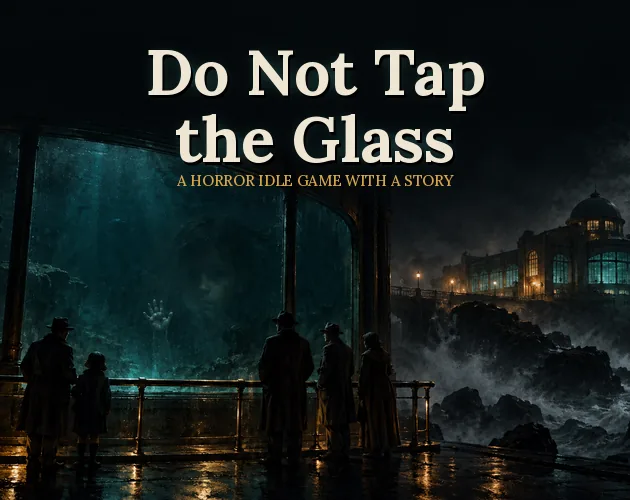
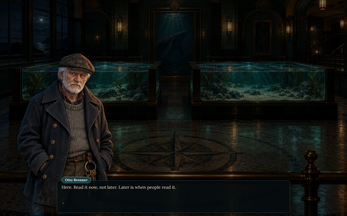
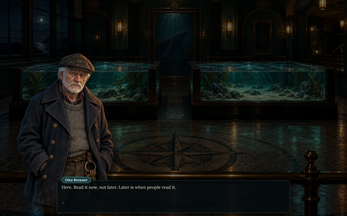
Do Not Tap the Glass is a story-driven horror idle game set in Gullhaven, Maine, in October 1977. The Saltmarsh Point Aquarium belonged to the player's grandmother for twenty-five years until she carried a green lantern into the well beneath the building and vanished. The Trust now needs money before the property is sold on November 1, and the player takes the night shift. At midnight the doors open on their own, visitors pay with wet pennies from 1919, and an old watchman hands over a card of seven rules; the first is underlined twice. The game costs $2.00 and builds a haunted aquarium across seven nights, from October 25 to 31. The appeal is not only the eerie setup but the structure: an idle economy, a rule-breaking story, and six endings, including one secret. A free browser demo covers Nights 1–3.
How to play
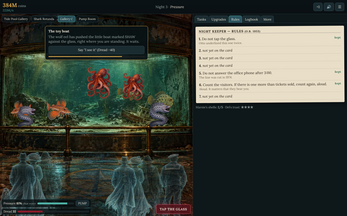
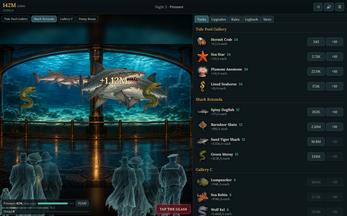
Play unfolds across seven nights. The aquarium grows tank by tank, with feeding and tank management forming the base layer. Pump pressure matters because clear or cloudy water changes the state of the exhibits; the pumps are tied to keeping the dead able to see. Above that sit bioluminescent Glow and Light Shows, and eventually a 100-fathom descent into Tank Zero. The aquarium holds 20 creatures across five halls: the Tide Pool, Shark Rotunda, Gallery C, the pitch-black Moon Room, and the Deep Tunnel. The central risk is tapping the glass. A tap can pay a large sum, but Dread rises and faces appear in the water. Seven rules can be kept or broken, and those decisions alter story scenes and endings. Idle progress continues offline, and speed can be set to ×2 or ×4. The first ending takes about 3.5 hours; seeing everything takes about 10.
Controls
Tapping the glass is the action the game is built around. Each tap creates a direct trade: a large payout arrives while Dread climbs and faces begin appearing in the water. That makes the tap action a risk dial rather than a harmless clicker. The other named interaction is deciding which of seven rules to keep or break; those choices change story scenes and endings. Pump pressure and feeding are management layers that support the tap-driven economy, while speed settings of ×2 and ×4 affect pacing. Auto-save and three save slots reduce the cost of experimenting with rule decisions. Android is among the listed platforms, and tapping is the named action. The glass remains the anchor: money first, atmosphere as the cost.
| Input | Action |
|---|---|
| Tap | Tap the glass for a large payout while Dread rises and faces appear in the water. |
Tips for your first run
Treat the first night as a test of pressure and pacing rather than a race to the biggest payout. The first rule is underlined twice, so that emphasis is worth respecting until a run is stable. Tap the glass in deliberate bursts; the payout is large, but Dread and the faces in the water are the stated cost. Keep pump pressure in mind because clear or cloudy water is part of the aquarium's condition, and the pumps are linked to the dead being able to see. Use the three save slots to test rule choices, especially once the six-ending structure comes into view. The free browser demo covers Nights 1–3 in about 30 minutes, which is enough to learn the rhythm before spending $2.00 on the full game. Expect roughly 3.5 hours to the first ending and about 10 hours for everything.
- Respect the double-underlined first rule until a run has spare room for consequences.
- Tap in bursts, not constantly, so Dread does not run ahead of the aquarium's income.
- Watch the clear-or-cloudy pump state; visibility for the dead is part of the management layer.
- Save before a rule decision if the goal is to compare story branches.
- Try the browser demo before buying; it covers the first three nights in about half an hour.
Content and replayability
The content is built for repeat runs rather than a single pass. Seven nights carry story scenes, choices, and seven mid-night interludes. The aquarium expands through 76 upgrades and 18 night events, with a Low Tide prestige layer that uses pearls. New Game+ is named Second Tide, with added lines and events; a bonus chapter is also included. The ending count is six, one of them secret, and the full sweep is estimated at about 10 hours. Collectors get 37 achievements, 20 logbook pages, and a codex covering creatures, people, and places. The five halls hold 20 creatures, so the bestiary and the tank layout give the idle systems a concrete set of goals. A first ending is reachable in about 3.5 hours, which makes the early story arc approachable before the longer completionist route. The $2.00 price applies to the full game; the browser demo is free.
Presentation and performance
Painted art sets the visual tone. Character portraits carry four expressions, ending illustrations mark the story's conclusions, and an original soundtrack includes a closing song. The language options are English and Português (BR), switchable at any time. The full game is a single offline HTML file that opens in a browser on Windows, Mac, Linux, or Android. The technical footprint is simple: one file covers the listed desktop and Android platforms. The browser demo covers Nights 1–3 and runs for about 30 minutes. Auto-save and three save slots support longer sessions, while offline progress and ×2/×4 speed options make the idle loop easier to manage. The atmosphere is carried by the aquarium setting, the Dread mechanic, and the rule card.
Who should play it
This suits players who want a horror atmosphere without giving up the momentum of an idle game. The loop is about expansion, pump management, Glow and Light Shows, and a deep descent toward Tank Zero, not twitch reflexes. The seven-rule structure gives story-minded players explicit decisions, and the six endings reward comparison. Fans of Halloween framing, ghost stories, and mystery will find the Gullhaven setting and the 1919 pennies doing a lot of tonal work. Completionists have 37 achievements, a 20-page logbook, and a codex to fill. The $2.00 price and free browser demo make the entry decision easy: try the first three nights, then decide whether the full offline file is worth a night shift. Players who dislike clicker economies or repeated runs should weigh the idle structure and the roughly 10-hour completion target.
Screenshots
How we tested it
The build was loaded from games.debutplay.com in a headless Chromium session on ; the canvas started and no request was blocked. The guide was last checked on .
From the developer
Do Not Tap the Glass Gullhaven, Maine, October 1977. Your grandmother kept the Saltmarsh Point Aquarium for twenty-five years, until she took a green lantern down into the well under the building and never came back. Now the Trust needs money before the building is sold on November 1st, and you have the night shift. At midnight the doors open by themselves. The visitors pay in wet pennies from 1919. The old watchman hands you a card with seven rules. The first one is underlined twice. Do Not Tap the Glass is a horror idle game with a story: grow a haunted aquarium tank by tank, keep the pumps running so the dead can see, and decide which rules you keep and which you break. Tapping the glass pays very well. Something always knocks back. 🐟 What's inside ~3.5 hours to the first ending, ~10 hours to see everything (6 endings, New Game+, bonus chapter) 7 nights (Oct 25–31, 1977) with story scenes, choices and 7 mid-night interludes 20…
Frequently asked questions
What platforms does Do Not Tap the Glass support?
HTML5, Windows, macOS, Linux, and Android are listed. The full game is a single offline HTML file opened in a browser; the demo runs in the browser.
How much does the full game cost?
The full game costs $2.00. The browser demo is free and covers Nights 1–3.
How long is Do Not Tap the Glass?
About 3.5 hours to the first ending and around 10 hours to see everything, including six endings and New Game+.
How many endings are there?
Six endings, one of which is secret. The seven rules can be kept or broken, and those choices change story scenes and endings.
Is there mobile support?
Android is listed among the platforms, and the central mechanic is tapping the glass.
Can it be played offline?
The full game is a single offline HTML file, and offline progress is listed. The browser demo is separate.
What games are similar to Do Not Tap the Glass?
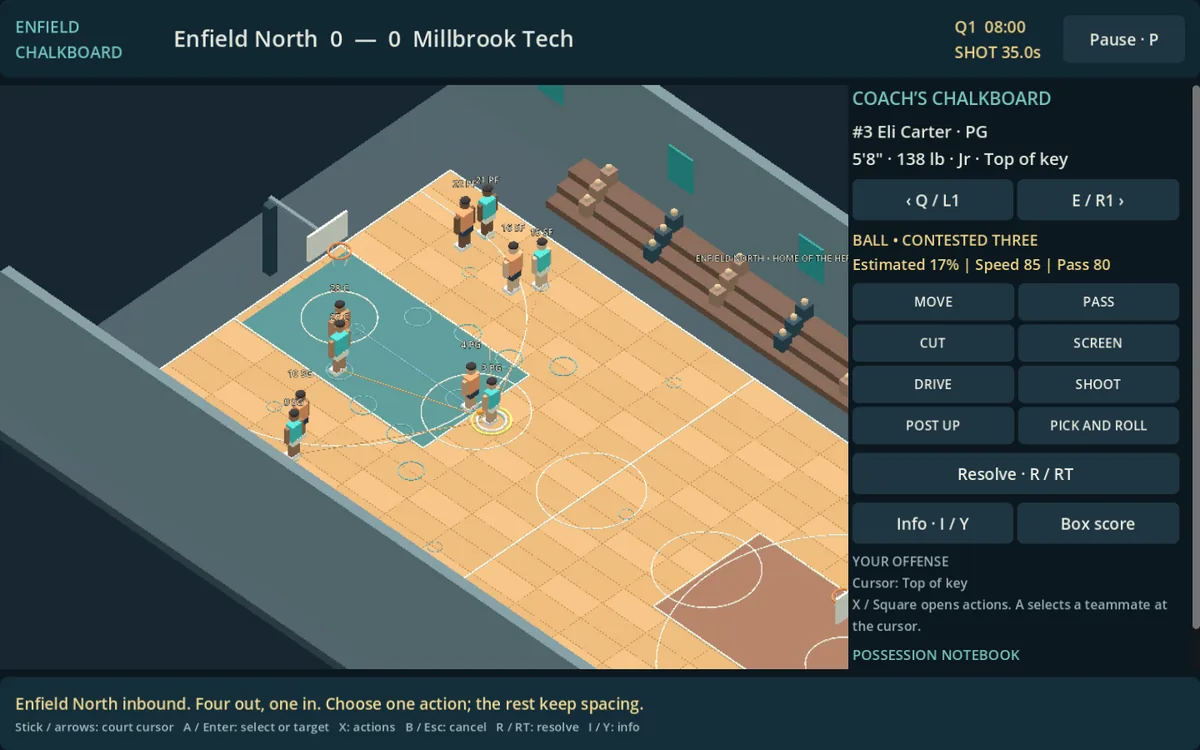
The closest matches on DebutPlay are Enfield: Chalkboard Basketball, Le Grenier (The Attic), Sushi Wave. They share the same genre, so the controls and the pace carry over.
Something wrong or missing? Tell us. How we test games.