Simulation · New game
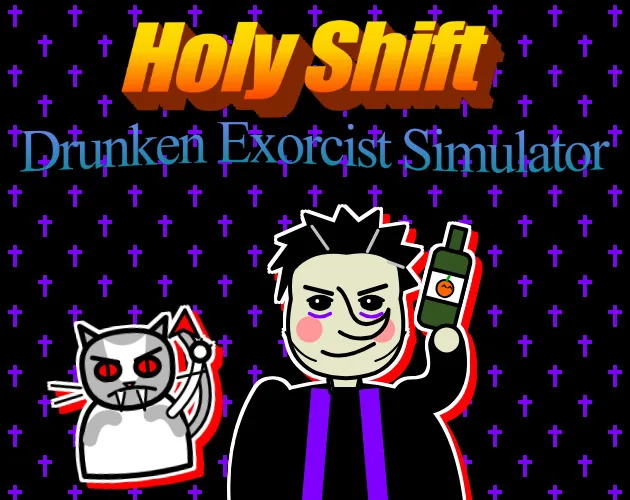
Holy Shift: Drunken Exorcist Simulator
A short, awkward first shift as an apprentice exorcist turns chalk, spells, strange ingredients, and a cryptic priest into a keyboard-driven comedy puzzle.
#8 this weekAI-assisted: Code, Graphics, Sound, Text
The game runs in this tab. No install, no account.
The short answer
Holy Shift: Drunken Exorcist Simulator is a free 2D comedy puzzle sim about surviving a Halloween shift under Father Zagani. Build exorcism rituals from four components, manage health, drunkenness, and holy water, and steer a keyboard cursor while the screen misbehaves. Three attempts per client and multiple endings give each botched ritual weight.
What is Holy Shift: Drunken Exorcist Simulator?
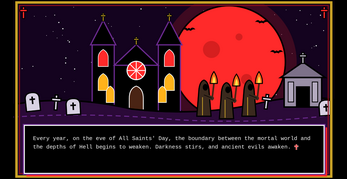
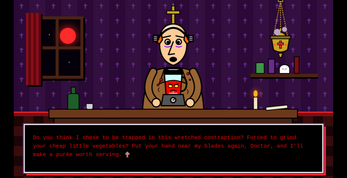
Holy Shift: Drunken Exorcist Simulator is a short 2D comedy simulator built around a first shift as an apprentice exorcist. The night is Halloween, and the player works under Father Zagani, a priest whose drinking and fondness for cryptic remarks shape the job. The task is to perform exorcisms, interpret his instructions, and keep everyone alive, including the apprentice.
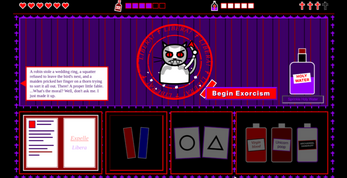
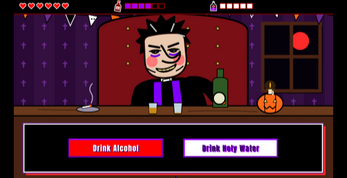
The work is not a straight action sequence. Rituals use magic chalk, spells, and peculiar ingredients, while three running concerns sit at the top of the screen: health, drunkenness, and a limited supply of holy water. Decisions can cost health or make cursor control worse. The game includes multiple endings, so a shift can finish in more than one way, and not every outcome is pleasant.
It is free, released on 29 October 2026, and available for HTML5, Windows, and macOS. The tone is deliberately awkward comedy, with fantasy and atmospheric touches. A single shift is the frame; the joke and the puzzle come from trying to follow a supervisor who may know more than he explains.
How to play
Every exorcism is assembled from four component categories: a spell, a chalk colour, a shape, and an ingredient. Choose one component from each category in any order, place all four on the ritual table, then select Begin Exorcism. A picked-up component can be cancelled before it reaches the table. Once a component is placed, it stays committed for that attempt, so the combination cannot be rearranged mid-ritual.
Each client allows three attempts. After the first or second failure, holy water can be sprinkled on the ritual table to unlock a fourth attempt. That extra try competes with the same limited holy water supply used elsewhere, so spending it is a trade-off. The four-part combination has one correct answer, which means a clean exorcism depends on finding the right set rather than brute-forcing unlimited tries.
The top of the screen tracks health, drunkenness, and holy water. Health can fall as a consequence of decisions. Drunkenness changes how the screen and cursor behave, and sobering up can also affect health. The puzzle is therefore not only the ritual combination but also the cost of each attempt and each recovery choice.
Controls
The control scheme is keyboard-only. WASD or the arrow keys move the cursor. Space or Enter handles interaction: selecting, picking up and placing objects, confirming choices, and advancing dialogue. The same keys cancel a picked-up component before it is placed on the ritual table. Mouse input is not part of the scheme.
That makes the cursor a physical part of the comedy. Drunkenness can make it refuse to cooperate, so even simple object handling becomes less reliable as the shift goes on. Keyboard-only dragging and dropping is a deliberate design choice. Every ritual action, from choosing components to starting the exorcism, runs through those two key groups.
The important distinction is between a component in hand and a component on the table. Cancel too late and the choice is locked in until the attempt ends. The controls reward patience: move the cursor, confirm the object, place it, then check the ritual before selecting Begin Exorcism. There is no need to hunt for a separate confirm button beyond Space or Enter.
| Input | Action |
|---|---|
| WASD / Arrow keys | Move the cursor. |
| Space / Enter | Interact, select, pick up and place objects, confirm choices, advance dialogue, and cancel a picked-up component before it is placed on the ritual table. |
Tips for your first run
Start by treating each ritual as a four-slot commitment rather than a guessing game. Pick one spell, one chalk colour, one shape, and one ingredient, then check the table before selecting Begin Exorcism. Because placed components cannot be swapped during an attempt, a slow confirmation is better than a fast mistake.
Watch the three meters at the top of the screen. Health, drunkenness, and holy water all shape what can be attempted next. Holy water is not only a fourth-attempt token; it is a limited resource that has other uses. If the first two attempts fail, decide whether another ritual try is worth the spend or whether the current client is better left alone. Sobering up may protect cursor control, but it can also cost health.
Use the cancel window. Space or Enter can remove a picked-up component before it lands on the table. Once it is placed, the choice is fixed until the attempt is over. Father Zagani's advice is cryptic by design, so compare it against the components rather than expecting a direct answer. Multiple endings mean a messy shift is still a run with an outcome, not a dead save.
- Map the four component types before touching the table.
- Confirm a picked-up object with Space or Enter, then place it deliberately.
- Keep one eye on holy water before spending it on a fourth attempt.
- Treat sobering up as a health trade-off, not a free reset.
- Expect cryptic guidance and test one interpretation per attempt.
Content and replayability
The core loop is short-form: one Halloween shift, one apprentice, one difficult supervisor. Replay value comes from the combination puzzle and the multiple endings. A failed exorcism is not only a loss state; it can lead to a different finish, including less pleasant ones. The choice between alcohol and holy water also feeds back into health and sobriety, so routes through the same shift can vary.
There are three attempts per client and a possible fourth after holy water is used on the table. That structure encourages experimentation within a bounded number of tries. The game was made in 14 days for The WORST Game Jam under the theme Grandma's Instructions, which helps explain the supervisor-as-puzzle premise. It is a singleplayer experience, with comedy, fantasy, atmosphere, and weirdness.
The appeal is that a shift can conclude in more than one way. The four-component ritual gives each attempt a clear shape, while the cryptic advice leaves room for interpretation. A player who enjoys replaying a short scenario to test a new reading of the instructions has a reason to return.
Presentation and performance
The look is 2D and deliberately reminiscent of the chaotic websites and Flash games of the early 2000s. That reference point fits the comedy: the interface is part of the joke, not a neutral frame. The game is built in Godot and carries atmospheric and fantasy tags alongside its comedic tone. Visual distortion is mechanical, too. As drunkenness rises, the screen swims, text doubles, and the cursor becomes harder to control.
That feedback turns a status meter into a playable obstacle. A high drunkenness level is not just a number; it changes how objects are read and how reliably they can be moved. Sobering up is an option, but health may object. The result is a presentation where clarity itself is a resource, and the player's ability to parse the screen is part of the challenge.
Claude Code contributed to programming, artwork, music, sound effects, and some writing polish; the concept, story, characters, and creative direction came from the human team. The project uses openly licensed typefaces, including Comic Neue and the Liberation family.
Who should play it
This is for players who like short comedy simulators with a puzzle at the centre and a weird streak. The four-component exorcism gives the shift a clear structure without turning it into a long campaign. Father Zagani's cryptic advice is the main hook: the game asks the player to interpret a supervisor rather than follow a clean checklist.
It also suits players who enjoy keyboard-only interfaces and the specific comedy of a cursor that misbehaves. The drunkenness effects make screen readability part of the challenge, so anyone who wants stable, precise controls at all times should expect friction. The free release and browser build lower the barrier for a first try, while Windows and macOS builds cover desktop play.
Players who want straightforward instructions, mouse control, or a serious exorcism horror tone are not the target. The game is openly comic, atmospheric, and built around awkward failure. A good session is one where a botched ritual produces a memorable ending rather than a flawless ritual.
Screenshots
How we tested it
The build was loaded from games.debutplay.com in a headless Chromium session on ; the canvas started and no request was blocked. The guide was last checked on .
From the developer
Holy Shift is a short, deliberately awkward 2D comedy simulator about surviving your first shift as an apprentice exorcist. It's Halloween, and under the expert guidance of Father Zagani, a priest with drinking issues and an impressive talent for cryptic advice, you'll be performing exorcisms, deciphering his instructions and trying not to get anyone killed (yourself included). Perform rituals using magic chalk, spells and some rather peculiar ingredients, all while managing your health, drunkenness and limited supply of holy water. What could possibly go wrong? Perks of the job Flawless exorcism mechanics. Four components, one correct combination, and plenty of opportunities to make a complete mess of things. There's a method to the madness, though we can't promise you'll work it out.Crystal-clear instructions. Father Zagani's advice is so cryptic it practically qualifies as a puzzle. Still, he's the boss. Surely he knows what he's…
Frequently asked questions
Is Holy Shift: Drunken Exorcist Simulator free?
Yes. It is available at no cost.
What platforms can run it?
HTML5 in a browser, plus Windows and macOS.
How many attempts does each client allow?
Three attempts, with a possible fourth if holy water is sprinkled on the ritual table after the first or second failure.
How does an exorcism work?
Choose a spell, chalk colour, shape, and ingredient; place all four on the ritual table; select Begin Exorcism. Placed components stay until the attempt ends.
Does it support mouse controls?
The scheme is keyboard-only. WASD or arrow keys move the cursor, and Space or Enter interact, select, place, confirm, advance dialogue, and cancel a picked-up component.
Are there multiple endings?
Yes. A shift can finish in more than one way, and some outcomes are less pleasant than others.
What games are similar to Holy Shift: Drunken Exorcist Simulator?
The closest matches on DebutPlay are Penguin Nursery, A Well-Run Exercise / Eine gut gelungene Alarmprobe, Gig Promotor (free early playtest of first 2 seasons). They share the same genre, so the controls and the pace carry over.
Something wrong or missing? Tell us. How we test games.