Simulation · New game
Oskolki: Shards of the Heart
A free browser colony sim about rebuilding on a floating shard, fitting out an airship, and helping four guardians restore the Heart of the world.
#11 this weekAI-assisted: Code, Text
The game runs in this tab. No install, no account.
The short answer
Oskolki: Shards of the Heart is a free singleplayer colony simulation that runs in HTML5 on PC, phone, and tablet. Begin with a handful of settlers, fell trees and break stone, build production chains, search ruins for rarity-based loot, and grow a settlement toward airship travel and a ten-chapter story. It is released and playable in the browser with nothing to download.
What is Oskolki: Shards of the Heart?
Oskolki: Shards of the Heart is a free HTML5 colony simulation set after the world has shattered. A small group of settlers lands on a floating shard surrounded by the ruins of an ancient civilisation, with a handful of crates in the open and forest close by. The opening work is direct: chop trees, split stone, and turn those materials into mills, forges, and workshops. As the colony grows, a worker can rise through artisan, master, and architect roles.
Exploration runs alongside construction. Ruins hide objects left by the ancients, and each find has a rarity and its own properties; the rarest items carry a story. The longer goal is to equip an airship and reach neighbouring islands, where four guardians are tied to restoring the Heart of the world. The game is singleplayer and uses procedural generation, so the island, ruins, place names, and even individual house designs are created fresh. A coat of arms and banner give the colony its own identity. The HTML5 build runs on PC, phone, and tablet, and it starts without a download.
How to play
The opening actions are cutting trees and breaking stone, with a few crates and a forest as the starting setup. Mills, forges, and workshops turn the settlement into a production base. The chains cover food such as bread and honey, construction goods such as planks and bricks, clothing and cloth, metalwork including ingots and tools, books and medicine, copper, and ancient power.
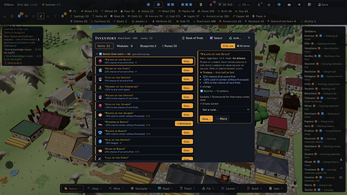
Settlers carry personal histories, changing moods, learned skills, character traits, and social ties that include both friendships and disputes. Happiness matters because content workers perform faster, while unhappy ones may leave. Once a season, one settler adds a page to the colony chronicle. Ruins are worth searching for loot: items vary by rarity and random properties, and the pool includes legendary effects, set pieces, rune systems with word combinations, and ancient relics.
The story unfolds across ten chapters. Expeditions and ancient vaults guarded by machines sit alongside bandit raids, which call for palisades, gates, and towers. Laws, neighbours, and trade routes expand the management layer, and the story ends with a final choice. An airship opens travel to neighbouring islands, while the four guardians connect the colony's progress to the Heart of the world.
Controls
On PC, the left mouse button drags the map, the right button rotates it, and the wheel zooms. The arrow keys or WASD move the map, Space pauses, and the number keys 1 through 8 select tools. On a phone, one finger drags the map, while two fingers zoom and rotate.
These controls keep map navigation separate from tool choice: the mouse or a finger moves the view, and a numbered key changes the active tool on desktop. Pausing with Space is useful before a layout change or when checking a settler's mood and traits. The game runs in HTML5 on PC, phone, and tablet, and it can be installed as an app and used offline. The control scheme does not require a download or a separate client; the browser frame is the play surface. Players who prefer keyboard movement can use arrows or WASD, while mouse users can drag and rotate the island view directly.
| Input | Action |
|---|---|
| Mouse | Left button drags the map, right button rotates it, and the wheel zooms. |
| Keyboard | Arrow keys or WASD move the map, Space pauses, and keys 1 through 8 pick tools. |
| Phone | One finger drags the map; two fingers zoom and rotate. |
Tips for your first run
A first run goes more smoothly when the opening actions stay simple and the management layer is read before the settlement expands. The built-in wiki covers the game's systems, and the flat 2D map is available for weaker devices.
- Cut trees and break stone as the first resource actions; they supply basic materials for early building.
- Add mills, forges, and workshops as the settlement grows, and watch workers progress toward artisan, master, and architect roles.
- Keep an eye on settler moods: happy people work faster, and unhappy people may leave.
- Use Space to pause before changing the map view, selecting tools 1 through 8, or reviewing a settler's traits and friendships.
- Search ruins for loot with rarity and random properties; the rarest finds also carry a story.
- Prepare palisades, gates, and towers before bandit raids become part of the chapter flow.
- On a weaker device, switch to the flat 2D map; on a stronger one, the living 3D island shows weather, moving settlers, and lit windows at night.
- Check the built-in wiki when a production chain or item property is unclear.
Content and replayability
Replayability starts with generation. Each world creates the island, its ruins, place names, and the look of every house fresh, and the colony receives its own coat of arms and banner. Loot supports repeated ruin runs: items vary by rarity and random properties, and the pool includes legendary effects, set pieces, rune systems with word combinations, and ancient relics.
The story spans ten chapters, with expeditions, machine-defended vaults, raids to repel, a legal system, neighbouring settlements, trade routes, and a closing decision. The island keeps moving between those objectives through weather and seasons, a day-night cycle, wildlife and hunting, forests that return over time, and buried ancient roads. Maps can reach 200 by 200 tiles. A built-in wiki covers the game's systems.
Each shard has its own soft chime melody, and more voices join as the settlement expands. Frequent updates add new chapters, mechanics, and fixes, so a launch colony is not a static one. The result is a management game with generated geography, a chapter-driven story, and loot hunting layered over base-building.
Presentation and performance
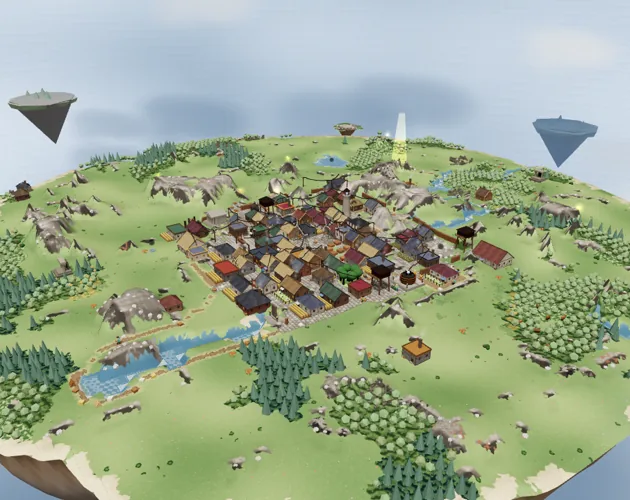
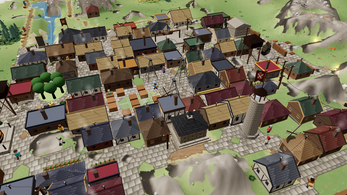
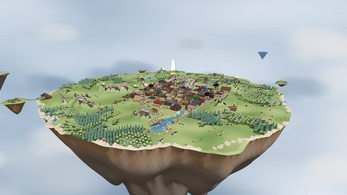
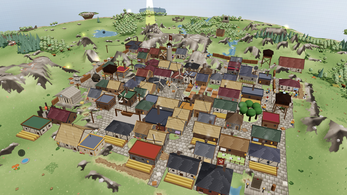
The main view is a living 3D island floating above the clouds. Trees bend in the wind, settlers travel to their jobs, rain and snow arrive, windows glow after dark, and ships plus far-off islets drift past. A flat 2D map is included for weaker devices, so the game offers a lighter view without changing the colony simulation. Worlds can reach 200 by 200 tiles.
Each shard has its own soft chime melody, and more voices join in as the colony grows. The HTML5 build runs on PC, phone, and tablet; it can be installed as an app and works offline. Saving is flexible: a login and password keep the colony in the cloud and allow it to be opened on another device, while playing without an account stores the colony in the browser. English and Russian are supported. The browser frame is playable, and no download is required to start.
Who should play it
Oskolki: Shards of the Heart is aimed at players who like colony simulations, base-building, city builders, crafting, management, and fantasy settings. The appeal is the combination of a generated island, production chains, settler moods and relationships, and loot with rarity and random properties. Players who want a chapter-driven goal have a ten-chapter story with expeditions, machine-defended vaults, raids, laws, neighbouring settlements, trade routes, and a closing decision. The airship and the four guardians give the settlement a longer destination beyond the first buildings.
It suits browser players who want a free HTML5 game on PC, phone, or tablet, especially those who value an installable app, offline play, cloud saves with a login, or a browser save without an account. The flat 2D map makes the game approachable on weaker devices, while the 3D island adds weather, moving settlers, and lit windows at night. Large 200 by 200 tile worlds and a built-in wiki give management-focused players room to plan. It is singleplayer, so the focus stays on the colony.
Screenshots
How we tested it
The build was loaded from games.debutplay.com in a headless Chromium session on ; the canvas started and no request was blocked. The guide was last checked on .
From the developer
The world has shattered. Your colony lands on a floating shard, among the ruins of an ancient civilisation. You start with a handful of settlers, a few crates under the open sky and a forest all around. Fell trees and break stone. Build mills, forges and workshops. Watch your people grow: workers become artisans, masters and architects. Search the ruins for things the ancients left behind. Every find has its own rarity and properties, and the rarest ones come with a story. Fit out an airship and sail to the neighbouring islands. Help the four guardians bring the Heart of the world back together. What's inside A living 3D island. Your shard floats above the clouds. Trees sway in the wind, settlers walk to work, rain and snow fall, windows light up at night. Ships and distant islets drift across the sky. A flat 2D map is there too, for weaker devices.Every world is new. The island, its ruins, the place names, even the look of every…
Frequently asked questions
Is Oskolki: Shards of the Heart free?
Yes. The game is free and runs in the browser with nothing to download.
What platforms are supported?
The HTML5 build runs on PC, phone, and tablet. It can be installed as an app and works offline.
Can the colony be played without an account?
Yes. Without an account, the colony is saved in the browser. A login and password keep it in the cloud and allow it to be opened on another device.
What are the phone controls?
On a phone, one finger drags the map, while two fingers zoom and rotate. The game also runs on tablet.
How large can a world be?
Worlds can reach 200 by 200 tiles.
Does the game have a story?
Yes. The narrative runs for ten chapters and includes expeditions, vaults guarded by machines, raids, laws, neighbouring settlements, trade routes, and a closing decision.
What games are similar to Oskolki: Shards of the Heart?
The closest matches on DebutPlay are Penguin Nursery, A Well-Run Exercise / Eine gut gelungene Alarmprobe, Gig Promotor (free early playtest of first 2 seasons). They share the same genre, so the controls and the pace carry over.
Something wrong or missing? Tell us. How we test games.