Racing · New game
RoombaCat SNES
A hungry cat, a cleaning robot, and two minutes to turn a crumb-covered floor into a stashed payday before anyone comes home.
#14 this weekAI-assisted: Code, Graphics, Sound, Text
The game runs in this tab. No install, no account.
The short answer
RoombaCat SNES is a two-minute score-attack racer in which Otto the robot sweeps up crumbs while Lupin waits for the haul, and every delivery has to reach the secret stash before the family returns. Drift a fast turn to charge a turbo, choose when to bank the loot, and chase a better rank. It is free, and it plays in a browser or as a downloadable SNES ROM.
What is RoombaCat SNES?
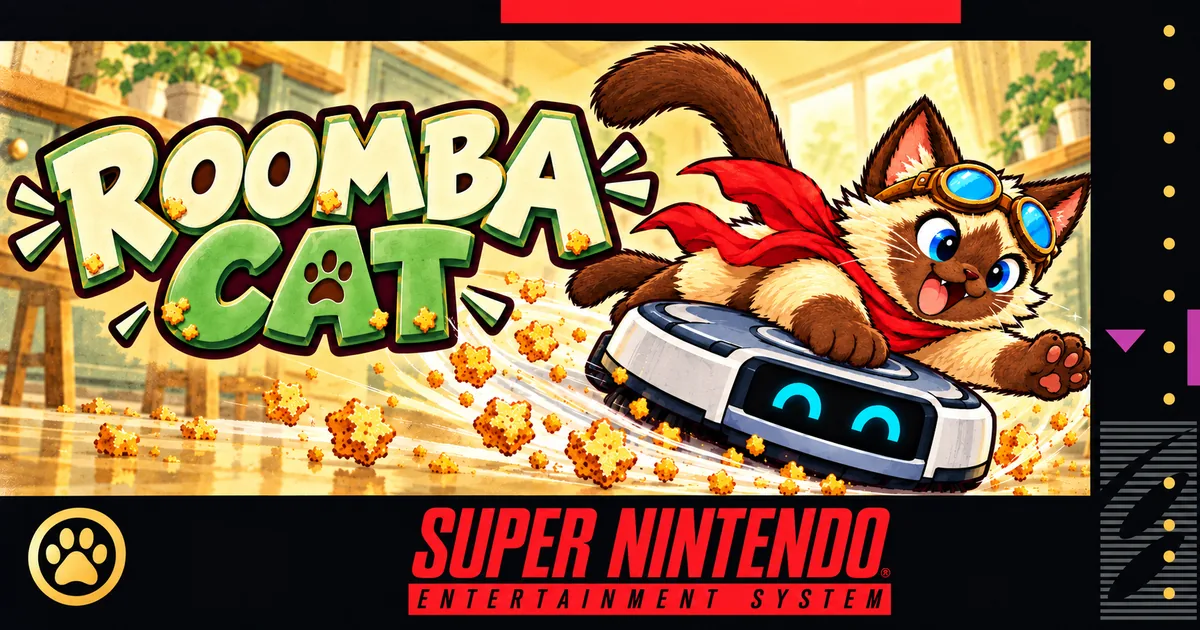
RoombaCat SNES is a short arcade racer built around a very small crime. Lupin is a cat on a diet. Otto is the robot vacuum that just wants to clean. Once the family leaves after breakfast, a floor covered in crumbs becomes the opening for a heist that has to be finished before anyone returns. The player rides Otto through the house, sweeps up the loot, and gets it into Lupin's secret stash inside a two-minute window.
The tension comes from the delivery rule. Only crumbs that actually reach the stash count, so a fast, full run that ends short of the hiding place pays nothing. Filling Otto's bag pushes the multiplier up to X2 and X3, but a heavier bag makes the ride heavier to handle. That is the whole gamble in one decision: cash in now, or risk one more corner?
This edition is a Super Nintendo homebrew build prepared for the SNES DEV Game Jam 2026. It is free to play, and it is offered both as a browser game in HTML5 and as a ROM for SNES hardware or emulation.
How to play
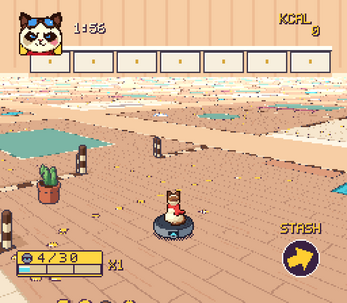
A run opens with two minutes on the clock and a house full of crumbs. Steer Otto along the floors, sweep up what is lying around, then carry it back to Lupin's secret stash. Each return trip is the moment the score becomes real, because nothing in the bag is safe until it has been handed over. The meter on the screen is the clock, and it does not stop while a route is being reconsidered.
The bag is the second meter. Load it up and it climbs to X2 and X3, which is where the big numbers live, but the heavier load changes how the machine drives. Corners that were easy at low weight take more planning, and a fast drift becomes more valuable as an escape tool than as a stunt.
The house is not a clean racing line. Slippery floors sit out there waiting to upset a turn, and tasty bonuses are scattered as optional detours. The call to keep Lupin on board runs through the whole job. Bank the crumbs, find the bonuses worth taking, and finish the heist with something in the stash rather than something in the bag.
Controls
The Super Nintendo control scheme is small and it maps cleanly onto the pad. The D-pad's left and right directions do the steering, B is the accelerator, and Y brakes before switching to reverse when it is held. Start pauses and resumes the run. Nothing else needs to be pressed, because there is no boost button and no drift button to hunt for.
Drifting is written into the steering itself. Turn while travelling fast and the drift begins. Keep holding that turn and the turbo charges; straighten up, releasing the turn, and the boost fires. That makes a corner a two-part decision: how long to stay sideways to build the charge, and where to let go so the turbo has a straight to spend itself on. Y matters here too, since braking before a corner and reversing out of a wall are the two ways to recover from a line that went wrong.
| Input | Action |
|---|---|
| D-pad left / right | Steer Otto |
| B | Accelerate |
| Y | Brake, then reverse |
| Start | Pause or resume |
| D-pad turn at speed | Start a drift; hold to charge the turbo and release the turn to fire it |
Tips for your first run
The first few runs are really about learning how long a round trip takes. Two minutes is not much time, and the multiplier only matters if there is enough clock left to reach the stash afterwards. A sensible opening rhythm is to bank a modest load early, then take bigger risks as the remaining seconds become clearer.
Weight is the trap. A bag at X2 or X3 changes the way Otto handles, so the corners that felt fine at low load will need earlier braking or a longer drift. Sliding floors make that worse.
- Bank a load before the clock gets tight; anything left in the bag when time runs out is lost.
- Chase the X2 and X3 bag multipliers only when the stash is close enough to reach with a heavier ride.
- Charge a drift through a fast corner and release the turn on the way out to fire the turbo down the next straight.
- Use Y to brake before a tight corner, and use the reverse gear to back out after clipping a wall.
- Treat slippery floors as the main hazard and slow down before crossing them.
- Take a detour for tasty bonuses when the crumbs already collected are safe rather than when the clock is short.
- The best score belongs to the current session, so plan a scoring block and restart on purpose.
Content and replayability
The structure is one two-minute heist at a time, repeated for score. Singleplayer is the whole offering here, and the game leans on score attack rather than a campaign: every run is a fresh attempt at a better rank and a better total than the last. Because a run is short, a failed gamble costs seconds rather than an evening, which is what makes the greed mechanic worth pushing.
There are two ways to play the same game. The browser version runs in HTML5 and needs no setup beyond clicking through to the playable frame. The Super Nintendo edition is a homebrew port built for the SNES DEV Game Jam 2026, delivered as a ROM: open the .sfc file in a SNES emulator, or load it on a compatible flash cartridge and play on the original hardware.
Persistence is deliberately limited. The best score is held for the current session and is cleared when the game restarts, so a strong total lives inside a single sitting. That design suits short bursts and repeat attempts rather than long-term saving.
Presentation and performance
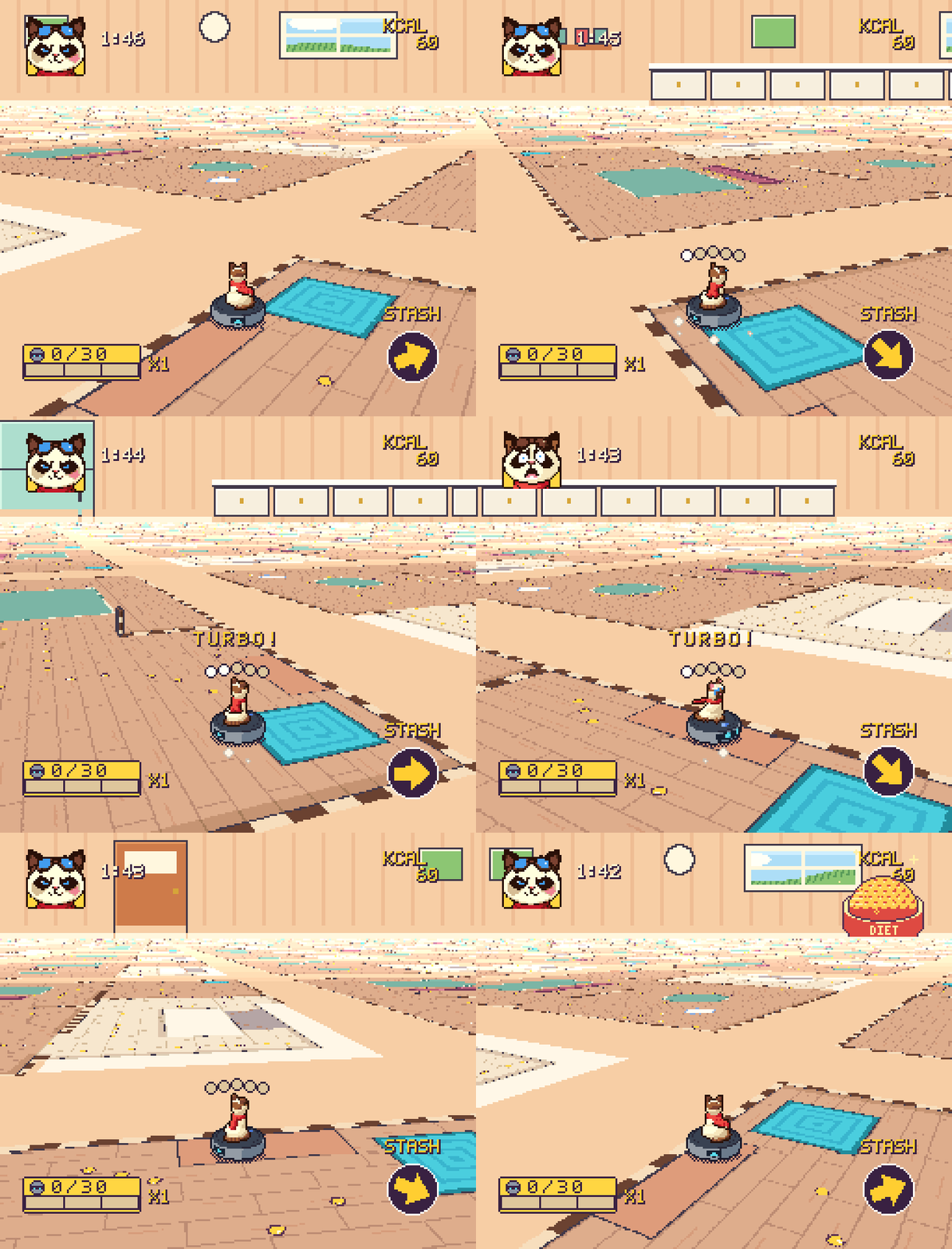
The SNES edition does real hardware tricks rather than flat scrolling. The house floor rotates as a Mode 7 plane beneath Otto, a Mode 1 horizon sits behind it, and HDMA handles the layering, so the domestic setting gets a racing-game sense of depth. Lupin and Otto are drawn from pre-drawn sprite angles, giving the cat and the robot a consistent look as they turn.
Sound is used as a progress readout. The SPC700 soundtrack adds layers as the bag fills, so the music tracks the risk level of the run instead of sitting in the background. The pixel art style carries across the whole build, from the rotating floor to the sprite work.
The port itself is written in C and 65816 assembly using PVSnesLib, with SNESMOD handling the audio side. Nothing about the presentation is claimed to require anything beyond a browser for the HTML5 version or a SNES emulator or flash cartridge for the ROM.
Who should play it
This is a game for players who like a scoring loop more than a story. The two-minute limit, the multiplier that punishes greed with weight, and the rank at the end of a run all point at the score-attack crowd: people who will happily replay the same house again to shave a second off a delivery.
It also suits anyone with a soft spot for SNES homebrew and Mode 7 trickery. Seeing a rotating floor and a layered horizon built with PVSnesLib and 65816 assembly is part of the appeal, and the ROM route means the game can sit on original hardware through a flash cartridge.
Finally, it fits short sessions. The premise is comic, the stakes are crumbs, and the controls are four inputs and a steering-based drift. Players who want a quick arcade race with a clear risk decision every thirty seconds will get the most out of it, while those looking for a long campaign should look elsewhere.
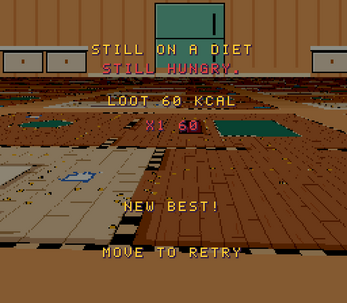
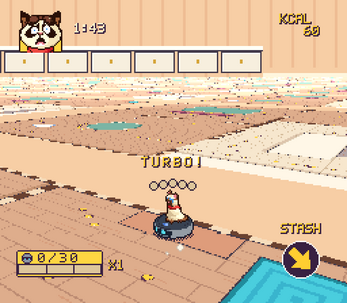
Screenshots
How we tested it
The build was loaded from games.debutplay.com in a headless Chromium session on ; the canvas started and no request was blocked. The guide was last checked on .
From the developer
A hungry cat. An innocent robot. The perfect crumb heist. Lupin is on a diet. Otto just wants to clean. With the family out after breakfast, a floor full of crumbs becomes the perfect opportunity for a very small crime. Ride Otto around the house, sweep up the loot and get it to Lupin's secret stash before the family comes home. You have two minutes. Every trip is a choice: cash in now, or risk one more corner? Sweep. Drift. Stash. Greed has weight. Fill Otto's bag to reach X2 and X3, but expect a heavier ride. Turn speed into a getaway. Hold a fast turn to drift, then straighten up to release a turbo. Keep Lupin on board! Bring home the bacon. Find tasty bonuses and watch out for slippery floors. Bank the crumbs. Only loot delivered to the stash counts. Anything left in the bag when time runs out is lost. One more run. Chase a better rank and beat your best score of the session. SNES controls D-pad left / right: steer. B: accelerate.…
Frequently asked questions
How long does one run last?
Two minutes. When the clock runs out, any crumbs still in Otto's bag are lost and only what already reached Lupin's secret stash counts.
Is RoombaCat SNES free?
Yes. The game is free to play, in the browser build and in the Super Nintendo homebrew edition.
How is the Super Nintendo edition started?
Download the ROM and open the .sfc file in a SNES emulator, or load it using a compatible flash cartridge.
Is there a dedicated drift button?
No. Turning while driving fast starts a drift, holding the turn charges the turbo, and releasing the turn lets the boost out.
Does the best score carry over between sessions?
It is kept for the current session only and resets when the game is restarted.
Which crumbs actually score?
Only the loot delivered to Lupin's secret stash. Anything left in the bag when time expires is lost, no matter how full it was.
What games are similar to RoombaCat SNES?
The closest matches on DebutPlay are TurboVektor, TurboVektor, GRAND TOURNAMENT AUTO. They share the same genre, so the controls and the pace carry over.
Something wrong or missing? Tell us. How we test games.