Simulation · New game
SHOALKEEPER
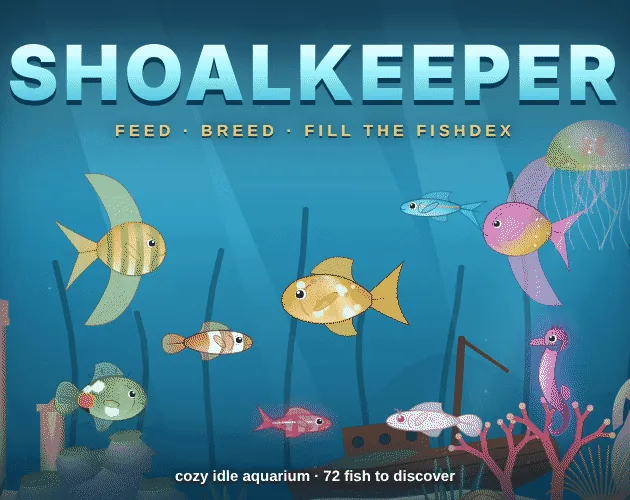
A calm aquarium sim about feeding fish, collecting shells, breeding pattern combinations, and building a reef that keeps working while the game is closed.
#14 this weekAI-assisted: Code, Graphics, Sound, Text
The game runs in this tab. No install, no account.
The short answer
SHOALKEEPER is a cozy aquarium simulation for browser and desktop, priced at $2.99. Feed fish, gather shells, breed new colour-and-pattern combinations, and spend earnings on species, decor and upgrades. A four-minute day-night cycle and up to eight hours of offline progress make it easy to check in, tinker, and leave the tank running.
What is SHOALKEEPER?
SHOALKEEPER is a simulation game from kqmigqkqri about turning a bare tank into a lively reef. The starting loop is simple: click the water to feed fish, then collect the shells that appear on the sand. Those shells become currency for new species, decorative pieces, and upgrades. The full game costs $2.99 and is available as an HTML5 build plus downloads for Windows, macOS, and Linux. A browser demo offers gobies, tetras, and blennies, with 27 fish to discover. The complete version widens the tank to eight species and 72 Fishdex entries. It also includes a breeding system, a four-minute day cycle, and offline progress. The tone is cozy rather than demanding: fish keep producing shells while the game is closed for up to eight hours, so returning players find new hatchlings and a fuller purse. The game released on 21 October 2026. The downloaded version requires no installation: unzip it and open the included index file in a modern browser.
How to play
Start by clicking the water surface; food drops in, and well-fed fish deposit shells on the sand. Click individual shells or sweep across them to collect. Shells are the main currency, spent in the shop on new fish types, decor, and upgrades. A bigger tank, an auto feeder, and a snail that gathers shells are among the 25 upgrades, while nine decor pieces range from kelp and a shipwreck to a lighthouse and sunken temple.
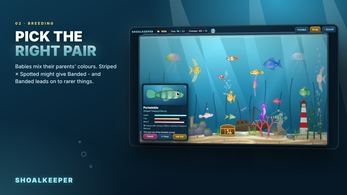
Breeding needs two happy adults of the same kind. Their eggs combine the parents' colours and inherit a pattern from one parent; occasionally a new result appears. Parent choice matters because particular crosses unlock particular patterns. Striped and Spotted can produce Banded, for example, and Banded may lead onward. The Fishdex records discoveries, pays a bonus for each new entry, and gives guidance on missing fish.
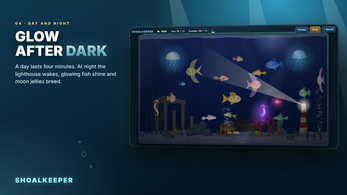
Time matters. One tank day lasts four minutes. Dusk warms the water, night brings the lighthouse sweep and glowing fish, and moon jellies breed only by moonlight. Close the game and production continues for up to eight hours. The loop is feed, collect, spend, breed, and check back rather than rush.
Controls
Control is mostly point-and-click. Clicking the water releases food. Clicking a shell picks it up, and sweeping the pointer across shells collects them in a batch. Clicking a fish opens its options so it can be inspected, paired for breeding, or sold. The keyboard shortcuts are limited and clear: F opens the Fishdex, S opens the shop, and M toggles sound. The input scheme is mouse and keyboard. The game is played in a browser via HTML5, or from a downloaded build on Windows, macOS, or Linux. The downloaded version needs no installation; open the included index file in a modern browser. Sound is part of the presentation and can be switched off with M. The controls match the core loop: feeding, collecting, inspecting, pairing, selling, shopping, and reading the Fishdex.
| Input | Action |
|---|---|
| Mouse | Click the water to feed fish; click or sweep shells to collect; click a fish to inspect, pair, or sell it. |
| F | Open the Fishdex. |
| S | Open the shop. |
| M | Toggle sound. |
Tips for your first run
Treat the first session as a setup pass. Feed the tank often enough to keep shells appearing, then collect before spending. The early Fishdex bonuses are useful because every new entry adds a payment, so discovering common fish is progress in itself. The Fishdex also points toward missing entries, which is more reliable than guessing at rare crosses. Breeding is where the long game sits: two same-kind adults produce eggs, and the young mix parental colours with a pattern taken from one parent. Pick parents with purpose. A Striped and Spotted cross can yield Banded, and the right pair can open patterns that random pairing may not.
- Click the water regularly, then sweep the sand for shells.
- Check the Fishdex after each new fish; the entry bonus and hints both help.
- Breed same-kind adults deliberately, using pattern pairings rather than selling every new hatchling.
- Consider upgrades that reduce chores, such as the auto feeder and the shell-collecting snail.
- Leave the tank closed when needed; up to eight hours of shell production continues.
Content and replayability
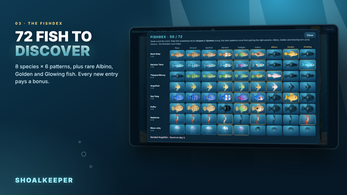
The collection target is 72 Fishdex slots. Eight species anchor the list, among them the Rock Goby, Harbour Tetra, and Moon Jelly, and each appears in six patterns, with rare Albino, Golden, and Glowing fish adding further finds. Breeding is the engine of the collection: offspring take colour from both parents and a pattern from one, while some results require specific crosses. That makes parent selection a puzzle rather than a formality. Decor options include kelp, a wreck, a chest, a lighthouse, and a sunken temple; upgrades cover a larger tank, automatic feeding, shell collection help, a breeding nook, and a mutation lens. A four-minute day cycle changes the mood and gates at least one breeding condition: moon jellies need moonlight. Offline production for up to eight hours means a break does not stall the collection. Before release, a bot played the real game code until all 72 slots were filled; the run took three to six hours of tank time, and the game has no dead ends. The result is a compact collection loop with clear completion criteria, not an endless idle screen.
Presentation and performance
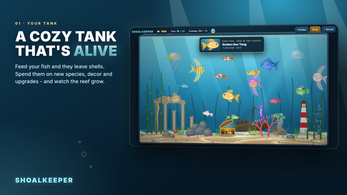
The visual style is built from code rather than imported image files. Every fish, picture, and sound is generated by code, and generative AI assisted with code, graphics, sound, and text. That keeps the look tied to the simulation: fish colours and patterns vary through breeding, while the day cycle shifts the mood. At dusk the water warms; at night the lighthouse beam crosses the dark and glowing fish stand out. The interface is deliberately small: the Fishdex, shop, and sound toggle sit on F, S, and M. A browser build makes the game quick to try, while the downloadable version for Windows, macOS, and Linux runs offline and saves automatically. The downloadable build is opened from an included index file; no installation step is required. There are four screenshots available for a look at the tank before starting. Because assets are code-made, the presentation is tied to the simulation rather than to large media files. The supported platforms are HTML5, Windows, macOS, and Linux.
Who should play it
SHOALKEEPER suits players who like a gentle management loop with a collection attached. Feeding, shell gathering, and shop spending are low-pressure actions, while breeding adds a deliberate puzzle: same-kind adults, mixed colours, inherited patterns, and specific crosses that unlock new results. The four-minute day and eight-hour offline window fit short check-ins and longer planning sessions. Completionists have a clear target in the 72-entry Fishdex, plus rare Albino, Golden, and Glowing fish to chase. Players who enjoy decorating a small space can work through nine decor pieces, and those who prefer automation can aim for upgrades such as the auto feeder and shell-collecting snail. The $2.99 price and desktop/browser availability make it a small commitment. The focus is the tank itself: feeding, breeding, decorating, and upgrading. Anyone who wants a cozy aquarium that keeps producing shells while closed is the core audience.
Screenshots
How we tested it
The build was loaded from games.debutplay.com in a headless Chromium session on ; the canvas started and no request was blocked. The guide was last checked on .
From the developer
A cozy aquarium that keeps going while you're away. Click the water to drop food. Fed, happy fish leave shells on the sand - gather them, spend them on new species, decor and upgrades, and watch a bare tank turn into a reef. BREED NEW FISHTwo happy adults of the same kind lay eggs. Babies mix their parents' colours and take a pattern from one of them - and now and then something new turns up. Pick the parents yourself: some patterns only come from the right cross. Striped and Spotted might give you Banded. What does Banded lead to? 72 FISH TO DISCOVEREight species - Rock Goby, Harbour Tetra, Tidepool Blenny, Angelfish, Sea Tang, Puffer, Seahorse and Moon Jelly - in six patterns each, plus rare Albino, Golden and Glowing fish. Every new Fishdex entry pays a bonus, and the Fishdex tells you how to find the ones you're missing. DAY AND NIGHTA day in the tank lasts four minutes. At dusk the water turns warm, at night the lighthouse sweeps…
Frequently asked questions
What is SHOALKEEPER?
A cozy aquarium simulation about feeding fish, collecting shells, breeding new colour-and-pattern combinations, and expanding a tank with species, decor, and upgrades.
What does the full game cost?
The full game is priced at $2.99.
Which platforms are supported?
The available formats are HTML5 in a browser plus downloadable builds for Windows, macOS, and Linux.
Is there a demo?
A browser demo includes gobies, tetras, and blennies, with 27 fish to discover.
How long does offline progress last?
Fish keep making shells for up to eight hours while the game is closed; returning players can find new hatchlings and a fuller purse.
How long is a tank day?
One tank day lasts four minutes, with dusk, night, lighthouse sweeps, glowing fish, and moon jelly breeding by moonlight.
What games are similar to SHOALKEEPER?
The closest matches on DebutPlay are Who's a Good Ghost?, Nusantara: Governor Simulator, Dig to Australia Deluxe. They share the same genre, so the controls and the pace carry over.
Something wrong or missing? Tell us. How we test games.