Simulation · New game
SPOILHEAP
SPOILHEAP is a free browser incremental about rescue archaeology, where every trowel scrape records a site that digging destroys.
#20 this weekAI-assisted: Code, Graphics, Text
The game runs in this tab. No install, no account.
The short answer
SPOILHEAP is a free browser archaeology incremental played as a rescue dig. Seven generated fields hold 57 kinds of find, from ploughsoil and pits to roundhouses, flint walls, and a mosaic floor. Recording a find preserves its worth; fast digging destroys context. Play now to balance speed, spoil-heap placement, and the approaching machine.
What is SPOILHEAP?
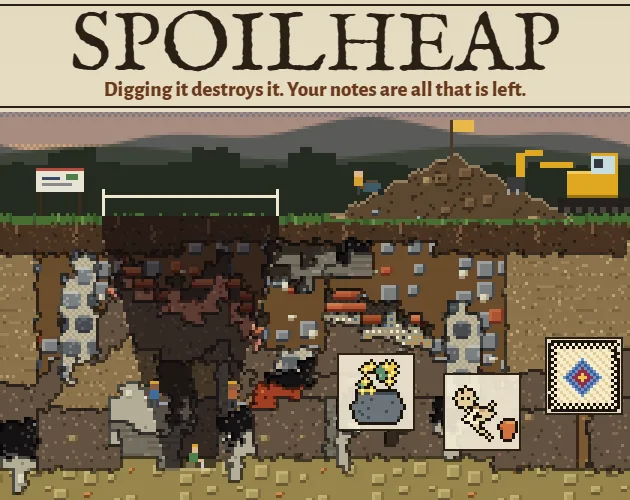
SPOILHEAP is a single-player browser game built around a rescue dig. A field is scheduled for construction, and the player has a limited window to read its buried sequence before the developer and machine take over. The view is a cut through the ground from the side, with deposits stacked oldest at the bottom and later features above. Ploughsoil, pits, ditches, roundhouses, flint walls, and a mosaic floor can all appear. Digging removes each layer permanently, so the notes and printed record become the surviving account.
The game combines incremental progression with archaeological decision-making. Seven generated fields offer 57 kinds of find, and each find is drawn from a seed. Finds go into a cabinet with labels showing where they lay and how much of that context was recorded. The tone is relaxed, but the central pressure is not: every excavation destroys the thing being studied, and the report is the only lasting version.
How to play
Choose a tool for each deposit rather than treating every layer the same. A trowel records everything but takes a very long time. A mattock moves through soil quickly and writes almost nothing down. A find pays its worth multiplied by the share recorded, and a context only counts once recording reaches 70 percent. That makes ploughsoil a candidate for the mattock, while a dark pit fill rewards the trowel.
Order matters as much as tool choice. A layer can be read only after whatever lay above it has been removed. Dig beneath something still standing and the finds lose their date and most of their value. Red on the section marks what is in the way, and a wider trench can take it in. Every bucket also goes onto a spoil heap. A distant tip is safe but means a long walk; a near tip shortens the walk, buries good ground, and can run back into the trench once its foot reaches that point.
The developer arrives on a set date and removes what remains. A week can be bought if the phone call is tolerable. When the site ends, the next field opens and purchased equipment carries forward.
Controls
Everything in SPOILHEAP can be handled with a click or a tap. On a phone, the upright and sideways layouts are separate, and a tap takes effect when the finger lifts. That makes the browser interface usable without a keyboard, while the game also maps several actions to keys.
Q, W, E, and R set the pace. Number keys 1 through 4 switch tabs. Space pauses, S changes speed, and M controls sound. Those bindings cover the main loop: choosing how quickly to work, moving between views, stopping the action, adjusting time, and muting audio. The control set is small and easy to remember, so the challenge sits in deciding what to record and what to sacrifice rather than in learning complex commands.
| Input | Action |
|---|---|
| Click or tap | Interact with the game; a tap acts when the finger lifts |
| Q, W, E, R | Set the pace |
| 1, 2, 3, 4 | Switch tabs |
| Space | Pause |
| S | Change speed |
| M | Control sound |
Tips for your first run
Treat the recording threshold as a budget. A context reaches its value at 70 percent, so spending trowel time above that mark is usually wasted, while rushing a rich deposit below it cheapens every find inside. Use the mattock on ploughsoil, then switch to the trowel for a dark pit fill or any deposit holding finds worth preserving.
Plan the spoil heap before the first bucket. A far tip protects the trench at the cost of walking time, while a near tip saves steps but buries good ground and may creep back into the excavation. Keep the section clear, remove overburden before reading lower layers, and avoid digging beneath standing features until the obstruction is handled.
- Match the tool to the deposit: fast mattock for ploughsoil, slow trowel for a dark pit fill.
- Watch the 70 percent recording mark before moving on.
- Place the spoil heap where the walk and the risk both make sense.
- Remove overburden before reading a lower layer.
- Buy a week if the phone call is tolerable.
Content and replayability
Each site closes with a printed report. It shows the section as it stood, in colour wherever the record was captured on paper, and includes a Harris matrix of what lay on what. That report is the durable result of a dig in which the ground itself is destroyed. The cabinet provides a second record: every find is generated by the game from a seed, with sherds drawn by rim and coins by emperor, and each label preserves where the object lay and how much of that context was recorded.
Replay value comes from the generated fields and the trade-offs between them. Seven fields can be excavated, and 57 kinds of find can appear across them. Purchases carry into the next site: extra diggers, plus volunteers who dig quickly but record poorly until supervised. Sieves, geophysics, a planning frame, and a photo tower support the work. Sampling dates a context. A foreman sets the pace, and a night watchman keeps an eye on metal-detector users. The browser save means progress persists, and the crew continue digging while the player is away.
Presentation and performance
SPOILHEAP uses pixel art for its cut-away ground and generated finds. The soils are produced by a pixel generator, while every section and every find is drawn by the game from a seed. Sherds vary by rim and coins by emperor, so the cabinet fills with objects that reflect the excavation rather than a fixed set. Music and sound are synthesised by the game's own code.
Performance is tied to the HTML5 browser build. The game saves itself in the browser and requires no account. On a phone, upright and sideways each have their own layout, and taps register when the finger lifts. The crew keep digging while the player is away, so progress can continue without a session being open. The interface is built around click or tap input, with keyboard shortcuts for pace, tabs, pause, speed, and sound.
Who should play it
SPOILHEAP suits players who enjoy incremental games with a management problem attached. The appeal is not just watching numbers rise: each layer can be read only once, each bucket must go somewhere, and every find's value depends on how much of its context was written down. Archaeology enthusiasts will recognise the rescue-dig frame, from ploughsoil and pits to roundhouses, flint walls, and a mosaic floor. Players who like a relaxed pace can work through seven generated fields, while those who want pressure can race the developer's arrival.
It is also a good fit for browser players who want a game that saves locally and needs no account. The cabinet and printed report give collectors and completionists a reason to care about recording quality, not only excavation speed. The pixel-art presentation and synthesised sound keep the tone gentle, even when a near spoil heap is burying good ground or a standing feature is blocking the section.
Screenshots
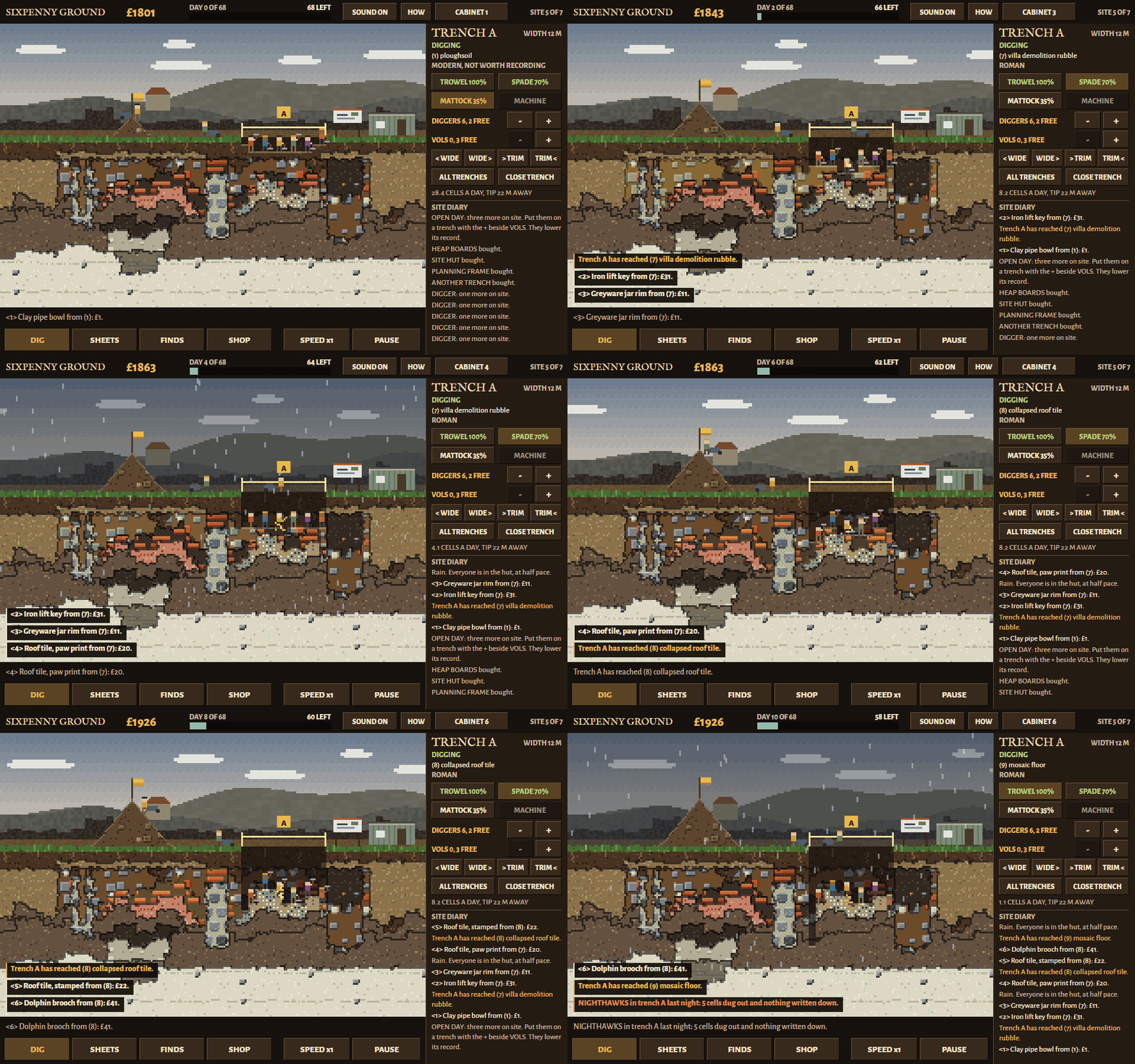
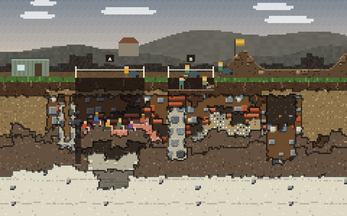
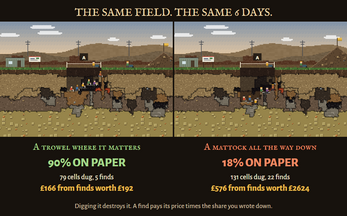
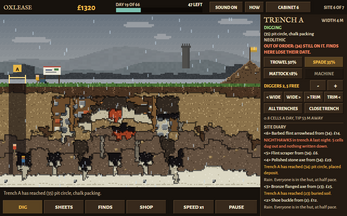
How we tested it
The build was loaded from games.debutplay.com in a headless Chromium session on ; the canvas started and no request was blocked. The guide was last checked on .
From the developer
Digging it destroys it. Your notes are all that is left. SPOILHEAP is a free browser archaeology incremental with 7 generated fields and 57 kinds of find: run a rescue dig before the machine arrives, and get it on paper. How it plays A field is about to be built on. The picture is that field cut through from the side: ploughsoil, pits, ditches, roundhouses, flint walls and, further on, a mosaic floor. All of it happened, oldest at the bottom, and all of it goes when you dig it. The pace. A trowel records everything and takes for ever. A mattock goes through soil fast and writes almost nothing down. A find pays its worth times the share you recorded, and a context only counts at 70%, so ploughsoil gets the mattock and a dark pit fill gets the trowel. The order. A layer can only be read once whatever lay on it has gone. Dig under something still standing and the finds lose their date and most of their worth. Red on the section shows…
Frequently asked questions
Is SPOILHEAP free to play?
Yes. SPOILHEAP is a free HTML5 browser game. It saves progress in the browser and needs no account.
What is the main goal?
Run a rescue dig before the developer and machine arrive. Record finds, place spoil heaps, and finish with a printed report of the section and a Harris matrix.
How does recording affect a find?
A find pays its worth multiplied by the share recorded. A context counts at 70 percent, so fast mattock work can cheapen a deposit while trowel work preserves more detail.
Can the game be played on a phone?
The game runs in HTML5 browsers and includes separate upright and sideways phone layouts. A tap acts when the finger lifts.
Does SPOILHEAP save progress?
Progress saves in the browser only. No account is required, and the crew keep digging while the player is away.
What happens at the end of a site?
Each site ends with a printed report showing the section in colour where it was captured on paper, plus a Harris matrix of what lay on what. The next field then opens with purchased equipment carried forward.
What games are similar to SPOILHEAP?
The closest matches on DebutPlay are Decision Maker, DomeLand Demo, What is PGSX. They share the same genre, so the controls and the pace carry over.
Something wrong or missing? Tell us. How we test games.