Rhythm · New game
Tempo Mortis
A beat-driven dungeon crawl through a haunted opera house, with a free browser demo, a $2.00 full game, and short runs built around timing.
#12 this weekAI-assisted: Unspecified
The game runs in this tab. No install, no account.
The short answer
Tempo Mortis is a rhythm dungeon crawler set beneath the Palais Lumière opera house in 1888. Odile searches for her brother Teo while every step, strike, and dig lands on the beat. Four zones, procedural floors, boss rhythms, and Groove chains make each run a timing test. A free browser demo covers Zone 1 before the $2.00 full game.
What is Tempo Mortis?
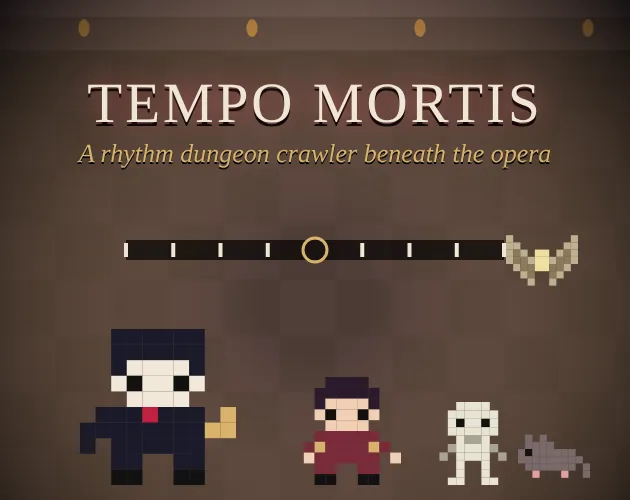
Tempo Mortis is a rhythm dungeon crawler set in and beneath the Palais Lumière opera house during Halloween 1888. Odile, an usher, carries a baton, a candle, and three masks. Her younger brother Teo has followed music through a trapdoor that was not there the day before, and the rescue takes her into a subterranean concert where the dead perform without end. The central rule is timing: movement, attacks, and digging all resolve on the beat. Chaining beats builds Groove and multiplies coins, while a missed beat wipes the chain away. The game spans four zones and twelve procedurally generated floors, from the Pit and the Bone Choir to the Flooded Organ and the Grand Stage. Each zone has its own soundtrack. Twenty enemies follow distinct rhythms, and four boss fights cap the descent. Odile can use thirty-one items, including spears, scythes, cymbals, rapiers, bell hammers, a cello bow, armor, lights, charms, and drum bombs. A free browser demo contains Zone 1 with three floors and Old Bassoon; the full game costs $2.00.
How to play
Each run asks Odile to go deeper, survive the floor, and bring Teo home. Actions are paced by the music: a step, a strike, and a dig are all beat events. The reward for consistency is Groove. String beats together and the coin multiplier rises; miss a beat and the chain disappears. That makes defense and offense a matter of listening before reacting. The dungeon is split into four zones and twelve procedurally generated floors, so layouts change from run to run. Enemies teach their own timing: rats skitter on every beat, skeletons wind up, skulls sing notes, eels swim on their own schedule, and puppets mimic steps. Bosses include Old Bassoon, the Choirmaster, the Organ Leviathan, and Maestro Morte. Between fights, thirty-one items cover weapons such as spears, scythes, cymbals, rapiers, bell hammers, and a cello bow, along with armor, lights, charms, and drum bombs. Marguerite's Lost & Found provides a shop. A successful run is estimated at twenty to thirty minutes; reaching a first ending usually takes one to two hours of runs.
Controls
Keyboard players can use the arrow keys or WASD. Touch players have two options: an on-screen pad or swipes. The timing layer is adjustable: the beat window can be changed, and latency calibration is available to align audio and input. Those settings matter because stepping, striking, and digging depend on landing actions on the beat. The game also offers English and Português (BR). The browser demo uses the same timing-focused approach in Zone 1, which includes three floors and the Old Bassoon fight. A player who prefers keys can stay on arrows or WASD, while a touch player can choose between a pad and swipe gestures. Before starting a longer session, use the calibration and beat-window options to make the rhythm readable.
| Input | Action |
|---|---|
| Arrow keys or WASD | Keyboard controls for beat-timed play |
| On-screen pad | Touch controls for beat-timed play |
| Swipe | Touch controls for beat-timed play |
Tips for your first run
Start by treating the beat as the action clock. A step, strike, or dig is only as useful as its placement, so lock onto the pulse before trying to speed through a room. Groove is the main pressure point: every chained beat raises the coin multiplier, and a single miss removes it. Build the chain on safe actions first, then add attacks when the rhythm is clear. Learn enemy patterns by sound and motion. Rats move every beat, skeletons wind up before acting, skulls sing notes, eels stay in swim patterns, and puppets copy steps. The four bosses, Old Bassoon, the Choirmaster, the Organ Leviathan, and Maestro Morte, turn those lessons into longer tests. Use the beat-window setting and latency calibration before a serious attempt. A winning run is estimated at twenty to thirty minutes, while a first ending usually arrives after one to two hours of runs, so short sessions are appropriate.
- Open with the browser demo in Zone 1, which includes three floors and the Old Bassoon fight.
- Keep Groove alive by chaining beats; the coin multiplier depends on it.
- Spend coins at Marguerite's Lost & Found.
- Use thirty-one item types, from spears and scythes to armor, lights, charms, and drum bombs.
- Adjust the beat window and calibrate latency before chasing a first ending.
Content and replayability
Tempo Mortis is sized for repeat attempts rather than a single clear. The campaign moves through four zones and twelve procedurally generated floors, with unique music for each zone and sixteen tracks in total. Twenty enemies carry separate rhythm identities, and four bosses close out major fights. The item pool reaches thirty-one entries, mixing weapons, armor, lights, charms, and drum bombs, with Marguerite's Lost & Found as the shop. Meta-progression adds applause, unlockable items, and four playable characters, plus three captive musicians to liberate and four torn score pages to find. Five endings, one of them secret, give long-term goals. Twenty-five badges and a Codex record milestones and discoveries. Encore Mode provides a new-game-plus loop, and a Daily Rhythm seed is included. The estimated pace is twenty to thirty minutes for a winning run, while a first ending usually takes one to two hours of runs. That structure favors players who enjoy learning enemy timing and improving Groove chains across repeated descents.
Presentation and performance
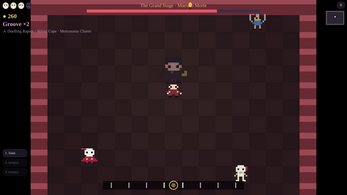
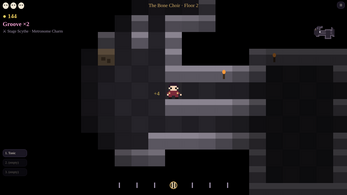
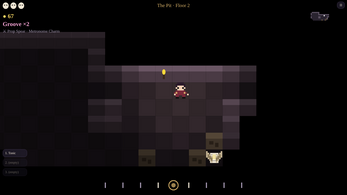
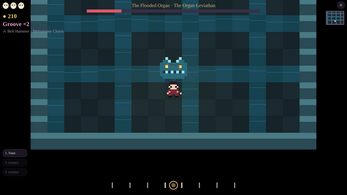
The visual identity is pixel art, paired with a Halloween opera-house setting. The action takes place beneath the Palais Lumière, where the dead perform an endless concert and the whole space moves to the beat. Sound is not background decoration: each of the four zones has its own soundtrack, and the full game contains sixteen tracks. Enemy design reinforces the rhythm read, with rats, skeletons, skulls, eels, and puppets each carrying a distinct motion pattern. Boss names such as Old Bassoon, the Choirmaster, the Organ Leviathan, and Maestro Morte extend the musical theme into confrontation. The full game is packaged as one offline HTML file for Windows, Mac, Linux, and Android, while the browser demo covers Zone 1 with three floors and the Old Bassoon fight. That makes the launch format easy to understand: a playable HTML5 frame for the demo and a download for the complete version.
Who should play it
Tempo Mortis suits players who want a dungeon crawler with a musical clock. The mix of rhythm, roguelike structure, procedural floors, and short runs points to anyone who enjoys learning patterns and retrying with better timing. The Halloween opera setting, pixel art, and enemy rhythms give it a distinct mood. Players who like meta-progression have applause, unlockable items, four characters, badges, a Codex, five endings, and a secret ending to pursue. The free browser demo is the low-risk entry point: Zone 1 includes three floors and the Old Bassoon fight. Touch players can use an on-screen pad or swipes, while keyboard players can use arrows or WASD. The $2.00 full game adds the complete set of zones, bosses, items, and modes in one offline HTML file for Windows, Mac, Linux, and Android. This is not a long-form campaign; a winning run is estimated at twenty to thirty minutes, and a first ending usually takes one to two hours of runs. That makes it a good fit for players who prefer compact, repeatable sessions with a clear rhythm skill curve.
Screenshots
How we tested it
The build was loaded from games.debutplay.com in a headless Chromium session on ; the canvas started and no request was blocked. The guide was last checked on .
From the developer
🎻 Tempo Mortis Halloween, 1888. Beneath the Palais Lumière opera house, the dead play an endless concert — and everything down there moves only on the beat. Your little brother Teo followed the music through a trapdoor that wasn't there yesterday. You are Odile, an usher with a baton, a candle and three masks. Step on the beat. Bring him home. 🥁 Every move is music: step, strike and dig on the beat. Chain beats to build your Groove and multiply your coins — miss one and it's gone.🏚 4 zones, 12 procedurally generated floors — the Pit, the Bone Choir, the Flooded Organ and the Grand Stage — each with its own soundtrack.💀 20 enemies with their own rhythms: rats that skitter every beat, skeletons that wind up, skulls that sing notes at you, eels that only swim, puppets that copy your steps…👑 4 boss fights: Old Bassoon, the Choirmaster, the Organ Leviathan and Maestro Morte.🗡 31 items: spears, scythes, cymbals, rapiers, bell hammers…
Frequently asked questions
What is Tempo Mortis?
It is a rhythm dungeon crawler set beneath the Palais Lumière opera house in 1888. Odile searches for her brother Teo while steps, strikes, and digs land on the beat.
How much does the full game cost?
The full game costs $2.00. It includes all zones, bosses, items, characters, endings, and modes in one offline HTML file. The browser demo is free and covers Zone 1.
Which platforms are supported?
The game is available for HTML5, Windows, macOS, Linux, and Android. The complete version is delivered as one offline HTML file for Windows, Mac, Linux, and Android; the demo runs in the browser.
Is there a free demo?
Yes. Zone 1 is playable in the browser with three floors and the Old Bassoon fight. The complete game is separate and costs $2.00.
How long does a run take?
A winning run is estimated at twenty to thirty minutes. Reaching a first ending usually takes one to two hours of runs.
What controls are supported?
Keyboard players can use arrow keys or WASD. Touch players can use an on-screen pad or swipes. The beat window is adjustable, and latency calibration is available.
What games are similar to Tempo Mortis?
The closest matches on DebutPlay are Packet Adventure: Even a Silly Photo Gets the Full Effort, Ring Catch, Keep Scrolling, Keep The Flame. They share the same genre, so the controls and the pace carry over.
Something wrong or missing? Tell us. How we test games.