Simulation · New game
Vacuum Everything
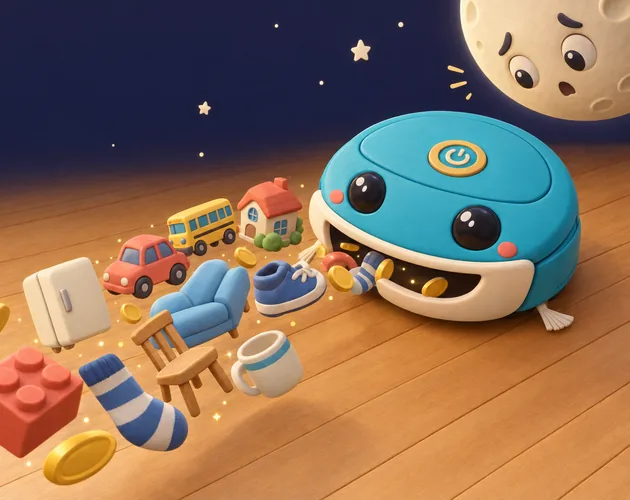
A free browser prototype in which a robot vacuum swallows crumbs, sofas and eventually a Ferris wheel, then spends the collected dust on a constellation skill tree.
#49 this weekAI-assisted: Code, Graphics, Sound, Text
The game runs in this tab. No install, no account.
The short answer
Vacuum Everything is a free HTML5 prototype about a robot vacuum that grows by swallowing anything smaller than itself, from coins up to a stadium. Thirty-second early runs fund a constellation skill tree of battery, turbo and mouth upgrades, and a daily challenge gives everyone the same house. Sessions run five to twenty minutes.
What is Vacuum Everything?
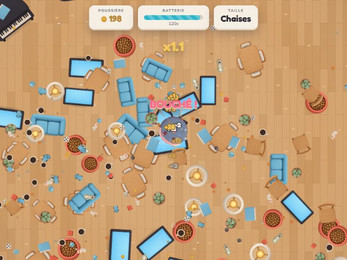
Vacuum Everything opens with a household robot vacuum reaching an uncomfortable conclusion: the world is dust that has not been collected yet. Anything smaller than the machine disappears with a soft pop and adds to its size, so the list of viable targets keeps expanding. Crumbs and coins come first, then a sock, a sofa and a fridge, and eventually a house, a Ferris wheel and a stadium. The escalation is the joke, and chasing the next impossible mouthful is the game.
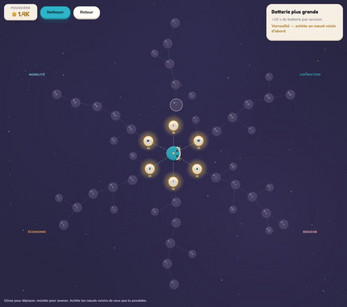
It is a 2D simulation that runs in the browser, published as a prototype by solo developer Virgiil. A first battery charge lasts 30 seconds, which makes the opening attempts feel like sprints. Dust gathered during those sprints is spent between runs in a constellation skill tree whose branches include battery capacity, turbo and a wider mouth. Each return starts stronger and swallows more. Sessions are pitched at roughly five to twenty minutes, and individual runs stretch from half a minute to a few minutes.
How to play
A run is a race between the vacuum's charge and the size of the room. Steering is indirect — the robot follows the cursor — so the skill lies in plotting a line through as many edible objects as possible without doubling back. Objects smaller than the current vacuum vanish on contact and make it larger, which unlocks bigger targets inside the same run.
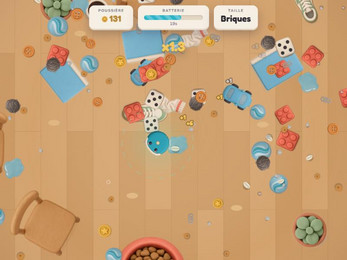
Speed matters beyond simple coverage. Chaining swallows quickly builds combos, so a tight sweep through a cluster beats a careful tour of the floor. Hairballs and puddles are hazards that hurt on contact, at least until an upgrade reclassifies them as loot, turning two of the room's annoyances into part of the harvest.
When the battery gives out, the vacuum rolls back to its dock and the dust becomes currency. The constellation skill tree is where the next attempt is shaped, with battery life, turbo and mouth width among the directions on offer. Swallowing a fridge marks a bigger step: it opens a move to a new house, and a move pays out in permanent chips rather than dust that resets. Then the loop begins again, with a larger vacuum and a larger room to clear.
Controls
The control scheme is deliberately small. The robot vacuum follows the mouse pointer, so moving the cursor across the screen is the whole of the navigation. There is no separate throttle and no aiming reticle to manage while the battery ticks down.
Hold the space bar for turbo, which becomes available once the skill tree has unlocked it. Turbo is the only other input, and it is a hold rather than a toggle, so it works as a burst of speed when a combo is live or when something unpleasant sits between the vacuum and a good cluster of objects.
Everything else is route planning. Because the vacuum trails the cursor instead of responding to clicks, sharp reversals cost momentum, and long sweeping lines through crumbs, coins and socks collect more than nervous little movements. The whole control set fits under one hand, which suits a game that plays out inside a browser tab.
| Input | Action |
|---|---|
| Mouse | Steers the robot vacuum, which follows the cursor around the room |
| Space (hold) | Turbo boost, available once it has been unlocked in the skill tree |
Tips for your first run
The first 30 seconds of any run are the hardest, because the vacuum starts small enough that most of the room is scenery. The opening sweep should aim at the cheap, dense stuff — crumbs and coins — where several quick swallows stack a combo instead of one long trip toward a prize that is still too big to fit.
- Work in clusters: a string of small swallows keeps a combo alive, while a lone oversized object often sits out of reach until the vacuum has grown.
- Route around hairballs and puddles until the upgrade that turns them into loot is in place; before that, contact hurts the vacuum instead of feeding it.
- Put early dust into battery life. A 30-second charge is a narrow window, and every extra moment is more objects swallowed.
- Use the dock pause to choose a direction in the constellation rather than spreading dust thin, since battery, turbo and mouth width each change how the next run feels.
- Save turbo for the stretch where a combo is running or where a hazard blocks the shortest line between two clusters.
Content and replayability
The structural hook is the daily challenge, which hands every player the same rules and the same house. Each day's attempt carries its own leaderboard, and that board is local for now, with an online version planned but not yet switched on. Measuring a run against a shared layout is a different exercise from clearing a personal room, because everyone is solving the same floor with the same starting limits.
Outside the daily, progress lives in two places: the constellation skill tree that persists between attempts, and the permanent chips earned by moving house after the fridge milestone. Autosave keeps both inside the browser, so a session can be closed and picked up later. The build ships in English and French.
Scope is honestly modest. This is an early prototype made in a few days by one developer, and the balance is described as rough; feedback on pacing and fairness is actively wanted. A planned Steam release is the longer-term target, while the browser build is the version to play now. A session of five to twenty minutes is enough for a few dock cycles and one meaningful upgrade.
Presentation and performance
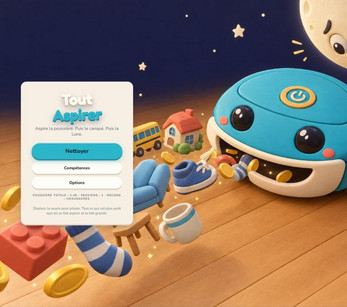
The visual pitch is specific: matte clay miniatures viewed from above, which gives houses full of furniture — and eventually a stadium — the look of a tabletop diorama. The art direction was written by hand, while the images themselves were generated with an AI model and then sliced and integrated manually, so scenes are assembled rather than rendered in a single pass.
Audio is procedural, built with Web Audio for music and effects rather than recorded tracks. That suits a game made of short repeats: quick runs, frequent returns to the dock, no fixed soundtrack carrying the experience. The HTML5 build runs in a browser tab and autosaves as it goes, so nothing needs installing first.
Expectations should match the prototype label. This is an early version with balance still being tuned, and the developer is asking players to flag runs that feel too slow, too fast or unfair. Pacing, rather than polish, is the thing being tested here, so a first session is best treated as a trial of the loop itself.
Who should play it
The obvious audience is players who enjoy watching a number get absurd. Vacuum Everything runs on the pleasure of scale: the same room that once shrugged off a sock eventually loses a fridge, a house and a Ferris wheel, and it delivers that in bursts short enough to fit between other things.
The mouse-led scheme and five-to-twenty-minute sessions make it an easy browser break, and the cozy, casual framing keeps the pressure low even while the battery drains. Fans of idle and incremental games will recognise the constellation tree and the permanent chips, while the daily challenge adds a comparable scoreboard for anyone who wants a shared puzzle.
It suits players who want a quick, slightly ridiculous simulation far more than those chasing a finished, tightly balanced game. This is a free prototype with rough edges, a local-only leaderboard for the moment and a Steam release still to come. Anyone willing to try an early build and say what felt slow or unfair is exactly the player being asked for.
Screenshots
How we tested it
The build was loaded from games.debutplay.com in a headless Chromium session on ; the canvas started and no request was blocked. The guide was last checked on .
From the developer
Vacuum Everything Your robot vacuum has worked something out: everything is just dust that hasn't been sucked up yet. Anything smaller than you goes in with a soft pop and makes you grow. Crumbs. Coins. A sock. The sofa. The fridge. The house. The Ferris wheel. The stadium. And then you look up. The battery lasts 30 seconds at first. When it dies, roll back to the dock, spend your dust in a constellation skill tree (battery, turbo, wider mouth...) and go again, bigger. Swallowed a fridge? Move house for permanent chips. Matte clay miniatures shot from above. Runs last 30 seconds to a few minutes; a session is one coffee (5-20 minutes). Autosaves in your browser, in English and French. Daily challenge: same rules and the same house for everyone, with its own leaderboard (local until the online board is switched on). Prototype: free early version, rough balance, Steam release planned later. Tell me what feels too slow, too fast or…
Frequently asked questions
Is Vacuum Everything free?
Yes. The current version is a free prototype that runs in the browser, and a Steam release is planned for later.
How long does a run take?
The first battery charge lasts 30 seconds. Individual runs range from about 30 seconds to a few minutes, and a full session is pitched at five to twenty minutes.
What happens when the battery dies?
The vacuum rolls back to the dock and the dust collected during the run is spent in a constellation skill tree covering things like battery life, turbo and a wider mouth. Then the next attempt starts bigger.
What is the daily challenge?
It gives every player the same rules and the same house, with its own leaderboard. The board is local for now, with an online version planned but not yet switched on.
What does swallowing a fridge unlock?
The fridge is the milestone that opens a move to a new house, and moving pays out in permanent chips rather than dust that resets between runs.
Is the game finished?
No. It is an early prototype with balance still being tuned, and feedback about what feels too slow, too fast or unfair is being collected ahead of a planned Steam release.
What games are similar to Vacuum Everything?
The closest matches on DebutPlay are Attract Mode, Baba Records, Rooftop. They share the same genre, so the controls and the pace carry over.
Something wrong or missing? Tell us. How we test games.